
Upgrades and additional treatment can maximize existing infrastructure
A wastewater treatment plant can be operating as designed when a new permit introduces tighter requirements. If the facility cannot meet those new limits, does the entire plant need to be replaced?
Not necessarily. Operational adjustments, targeted upgrades, and additional treatment processes might be enough. The first step is understanding what has changed in the permit, what the existing plant can achieve, and where treatment falls short.
In This Article
Start With What Changed in the Permit
Begin by reviewing the wastewater discharge permit to identify any new or more stringent requirements. New requirements might include tighter limits for nutrients, biochemical oxygen demand (BOD), or total suspended solids (TSS), or additional contaminant limits or more stringent disinfection standards.
Not every permit change requires new infrastructure. Some might involve monitoring, sampling, or reporting requirements that can be addressed with operational adjustments. Others might require improvements to treatment performance or additional processes. Because wastewater regulations influence treatment system design, facilities must consider how changes will affect current performance and future plans.
Where Existing Processes Reach Their Limits
Facilities must evaluate what the existing treatment processes can reliably achieve. Plants might have unused performance potential that can be identified by reviewing influent, process, and effluent data. This data also reveals differences between a plant’s original design capacity and its performance under current conditions.
Average and peak flows, seasonal temperature changes, and fluctuating loads all must be considered when assessing whether the plant can consistently meet new discharge limits. A lower monthly average and a tougher daily maximum, for example, can demand different degrees of process stability.
The analysis should reveal where treatment falls short. More stringent total nitrogen limits might require additional anoxic treatment, internal recycling, or an available carbon source. Phosphorus reduction can depend on chemical precipitation and solids management, while tighter suspended solids limits can expose clarification problems, particularly when higher flows disrupt settling.
A plant that occasionally meets a new limit might still require modifications to maintain compliance consistently under varying conditions.
Can Operational Changes Close the Gap?
Facilities should determine whether adjustments to existing treatment processes could improve performance enough to meet revised requirements. Changes to aeration control, solids retention, chemical dosing, or solids management can improve treatment efficiency without major construction. Maintenance, operator training, and improved monitoring can also help facilities identify performance issues.
However, operational improvements cannot overcome a fundamental treatment or capacity limitation. If the plant cannot reliably meet the revised permit requirements through operational changes, additional infrastructure might be necessary. The best approach depends on the treatment gap, the condition of existing infrastructure, and the ability to integrate new processes into the facility.
Expanding Treatment Without Replacing the Plant
A membrane bioreactor (MBR) retrofit offers a small-footprint solution when solids separation or clarification limits performance. MBR technology combines biological treatment with membrane filtration, retaining biomass while producing low-solids effluent without conventional final clarifiers. Existing basins might be adapted for membrane separation, or an additional MBR stage might be incorporated. Although MBR systems can have higher installation, operating, and maintenance costs than conventional alternatives, their treatment capabilities and smaller footprint make them an attractive option.
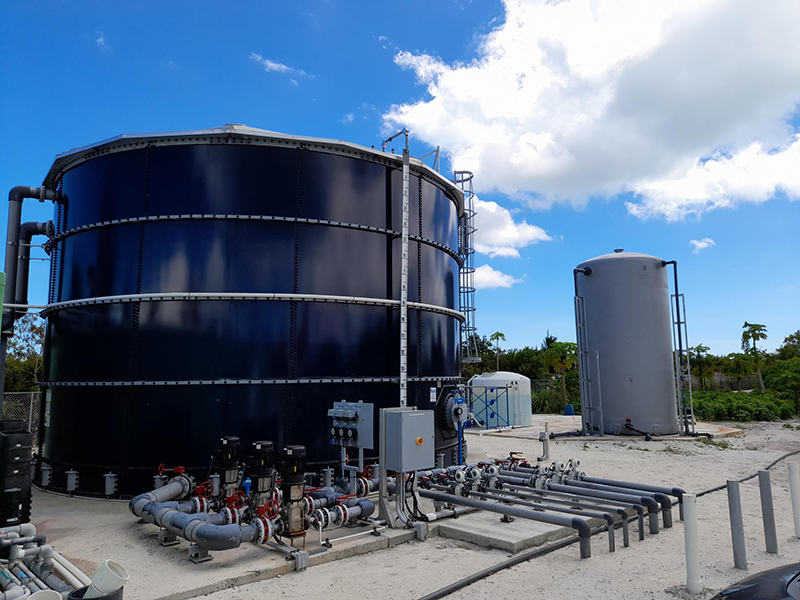
The Leeward Estates plant serves a resort, residential community, and marina in Turks and Caicos.
Seven Seas Water Group has applied MBR technology at Leeward Estates in Turks and Caicos, where a 50,000-gallon-per-day wastewater treatment system produces high-quality effluent for landscape irrigation. The system was installed in phases to accommodate the development’s growth.
Depending on the permit requirements, an MBR retrofit may also be paired with biological nutrient removal, chemical phosphorus reduction, or additional disinfection to achieve the necessary effluent quality. Other targeted upgrades, including filtration and improvements to existing treatment processes, can address performance limitations while preserving infrastructure that already performs reliably.
Prefabricated treatment systems are another way to expand treatment capabilities or capacity. Biological reactors, nutrient removal stages, and solids separation systems can be assembled off-site with integrated tanks, pumps, and controls, potentially reducing on-site construction. Prefabricated units might supplement treatment processes, provide additional capacity, or add downstream treatment to help meet tighter standards.
Where hydraulic capacity is limited, a prefabricated treatment train could treat a portion of the incoming wastewater, provided the combined effluent meets the revised discharge limits.
Seven Seas can integrate MBR, biological nutrient removal, filtration, and other treatment technologies into existing facilities, with flexible delivery and financing options that help utilities meet new requirements without committing to a complete plant replacement.
Facing New Wastewater Discharge Requirements?
A complete plant replacement may not be necessary. Seven Seas can help evaluate treatment upgrades, additional capacity, and flexible financing options to meet changing permit requirements.
Maintaining Service During an Upgrade
Major retrofits might require a basin, clarifier, or biological treatment stage to be taken offline. Temporary bypass treatment systems can maintain operations during construction. For projects with a defined construction timeline, leasing a temporary treatment plant offers a practical alternative to purchasing infrastructure.

Temporary wastewater treatment systems can maintain service during plant upgrades, expansions, or construction of permanent infrastructure.
Seven Seas offers temporary wastewater treatment solutions through its Lease Plant Program. In Hunt County, Texas, Seven Seas deployed a 155,000-gallon-per-day bypass plant to provide additional treatment capacity while a larger, permanent facility was under construction. The temporary plant was operational within three months, helping the developer accommodate growth without interrupting service.
When Major Rehabilitation or Replacement Makes Sense
The key factors in deciding whether to rehabilitate or replace are treatment performance, long-term costs, and the condition of existing infrastructure. Major rehabilitation or complete replacement may make sense when critical equipment nears the end of its useful life, multiple treatment processes are inadequate, or hydraulic constraints make targeted improvements impractical. Anticipated growth and the cumulative cost of repeated upgrades also factor into the decision.
Targeted upgrades become attractive when the plant’s major structures remain sound, existing treatment processes perform reliably, and the compliance gap can be addressed through targeted modifications. Available space, opportunities to integrate new technologies, and the ability to maintain service during construction further strengthen the case for preserving existing assets.
Planning for Future Treatment Requirements
Meeting today’s discharge limits is important, but treatment needs can change over the life of an upgrade. Anticipated growth, changes in influent characteristics, and future regulatory requirements all influence whether a proposed improvement will remain effective.
While facilities shouldn’t overbuild based on uncertain future regulations, designing with reasonable flexibility can help avoid costly modifications later.
Targeted upgrades can extend a plant’s useful life and accommodate growth without the cost of a complete replacement, provided the improvements align with the facility’s longer-term treatment and operational needs.
A Treatment Solution Built to Last
A change in wastewater discharge requirements doesn’t mean an existing treatment plant must be replaced. The best solution depends on the compliance gap, the condition of existing infrastructure, and long-term capacity needs.
Seven Seas integrates treatment design, construction, operations, and maintenance, including Water-as-a-Service® (WaaS®) arrangements, to address changing treatment requirements while preserving valuable existing infrastructure.
Contact Seven Seas to discuss meeting new discharge requirements while planning for long-term treatment needs.