

Flexible infrastructure and service models can remove wastewater bottlenecks without another large company-owned plant
When a manufacturer wants to add production equipment but lacks the wastewater capacity to support it, building or purchasing a new treatment plant isn’t necessarily the only solution.
Reliable water and wastewater systems remain essential to industrial production. A new product line, higher production volume, changing wastewater strength, or revised discharge requirements can expose a constraint that previously remained manageable. Today, plant managers have choices about how to address the constraint. As manufacturers continue reevaluating how water and wastewater infrastructure supports long-term growth, many are rethinking traditional wastewater systems.
In most cases, manufacturers simply need more capacity, not the risks and burdens of upfront capital investment, staffing, operations, upgrades, repairs, maintenance schedules, and parts inventories for another large, technically demanding plant that falls outside their core business.
Seven Seas Water Group can tailor a delivery model to an industrial operation’s capital and operating priorities, reducing or eliminating upfront costs and easing operational burdens while keeping experienced water professionals on the job for the long term.
In This Article
When the Existing System Starts Limiting Production
A wastewater system becomes a production constraint when it consistently operates near design capacity, struggles with peak loads, or cannot accommodate planned growth. Aging equipment may become less dependable just as the facility needs more capacity. In some cases, limited physical space may make a conventional expansion difficult.
Production changes and discharge requirements also need to be evaluated together. Industrial discharge permits may establish limits based on production levels, and adding a process line can change the applicable permitting calculation.
Building another complete plant often seems like the obvious response. However, such a project can require substantial upfront capital, place construction activity beside ongoing operations, and add capacity years before demand fully develops. More flexible infrastructure and delivery choices can help align treatment investment with actual production needs.
Add Wastewater Capacity in Phases
Manufacturers often add supplemental treatment capacity with prefabricated systems alongside usable existing infrastructure. A manufacturer might dedicate the added capacity to a new production line, seasonal peaks, an expanding satellite facility, or growth whose timing remains uncertain.
Compact equipment, offsite fabrication, and integration with existing assets can make staged expansion practical across a range of scenarios. Instead of replacing the entire system, the facility can plan capacity additions around defined production milestones.
Leasing Treatment Plants
Leasing treatment plants provides another way to obtain supplemental infrastructure without purchasing it outright. Seven Seas’ short- and long-term leases keep options open, providing a good fit for manufacturers that may need to delay a long-term infrastructure commitment or want to preserve capital for core production assets while conducting O&M in-house. With Seven Seas’ Lease Plant Program, everything inside the fence can be leased. Customers may also exercise an option to purchase or seamlessly transition into a long-term Industrial Water-as-a-Service™ (iWaaS™) partnership when the time is right.
Outsource Capacity Through Industrial Water-as-a-Service™
Building on its proven Water-as-a-Service® model, Seven Seas developed iWaaS™ to give manufacturers the treatment capacity they need without adding another large company-owned infrastructure project to the capital plan and operating workload. iWaaS™ addresses far more than equipment acquisition. Under a long-term agreement, Seven Seas provides design, financing, construction, operations, maintenance, repairs, upgrades, and ongoing service through a single accountable partner.
The distinction becomes important when internal wastewater personnel already face competing demands. An equipment lease changes how the facility acquires treatment assets, but the manufacturer may still carry responsibility for staffing, daily operation, maintenance, and performance. iWaaS™ transfers a broader scope of responsibility to one accountable provider, with measurable requirements and applicable guarantees defined in the agreement.
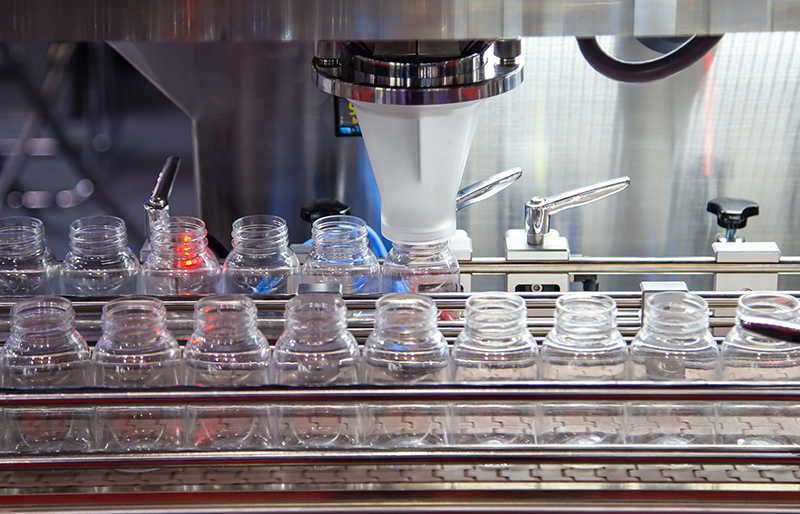
Manufacturers can increase wastewater treatment capacity through phased infrastructure, leasing, and Water-as-a-Service® rather than immediately investing in a new treatment plant.
Such an arrangement also changes the capital decision. Costs can be structured through a long-term service agreement, reducing the need for a major upfront capital commitment and allowing management to direct more capital and attention toward the company’s core business, and systems can grow with demand.
Reduce the Requirement Through Water Reuse
Water reuse can complement added treatment capacity by reducing freshwater demand and, in many applications, the volume requiring discharge. Recycled water from onsite processes may support manufacturing, cooling, or other nonpotable applications after treatment appropriate to the intended use.
Seven Seas offers expandable reuse systems through leasing and WaaS® to deliver important resilience, water-risk mitigation, and environmental, social, and governance (ESG) advantages that can help manufacturers advance their sustainability targets.
Choose the Right Wastewater Capacity Strategy
No single delivery model fits every manufacturer. Phased additions can suit incremental or uncertain growth. Leasing may work for a facility with operating expertise but little interest in purchasing more equipment. iWaaS™ can fit a manufacturer seeking capacity, financing, operations, maintenance, and performance accountability through one agreement. Reuse may reduce the total discharge requirement while supporting broader water objectives.
The evaluation should consider existing infrastructure, available footprint, growth projections, implementation needs, internal staffing, capital priorities, permit conditions, and the desired allocation of ownership and operating responsibility. Rather than approaching the constraint as an equipment sale, Seven Seas evaluates these factors as part of a complete treatment and delivery strategy.
Contact Seven Seas to discuss phased systems, leasing, reuse, and iWaaS™ options that support your facility’s production goals.
Expanding Manufacturing Wastewater Capacity FAQs
Can a manufacturer increase wastewater capacity without replacing its existing treatment system?
What is the difference between leasing wastewater equipment and Water-as-a-Service®?
Leasing primarily changes how the manufacturer acquires treatment equipment. The facility may retain responsibility for staffing, operations, and maintenance. iWaaS™ can combine infrastructure delivery and financing with operations, maintenance, repairs, and contractually defined performance obligations under one provider.