
For more than a century, conventional activated sludge has been the mainstay process of wastewater treatment across the globe
Seven Seas Water Group has decades of experience in wastewater treatment, turning domestic and industrial wastewater into safe effluent for discharge or reuse applications. With a long record of maintaining an unparalleled 97% plant availability, Seven Seas’ activated sludge plants have earned a reputation for top-quality equipment and reliability. The activated sludge process offers an efficient, sustainable solution for wastewater treatment, helping municipalities and industrial customers comply with environmental standards and protect public health.
Seven Seas revolutionizes wastewater treatment with Water-as-a-Service® (WaaS®) financing. By eliminating upfront costs and offering flexible financial arrangements like build-own-operate and build-own-operate-transfer, WaaS® empowers customers to achieve better wastewater management while reducing financial burdens. This innovative approach solidifies Seven Seas’ position as a leading provider of cost-effective, high-performance wastewater solutions.
What Is Activated Sludge?
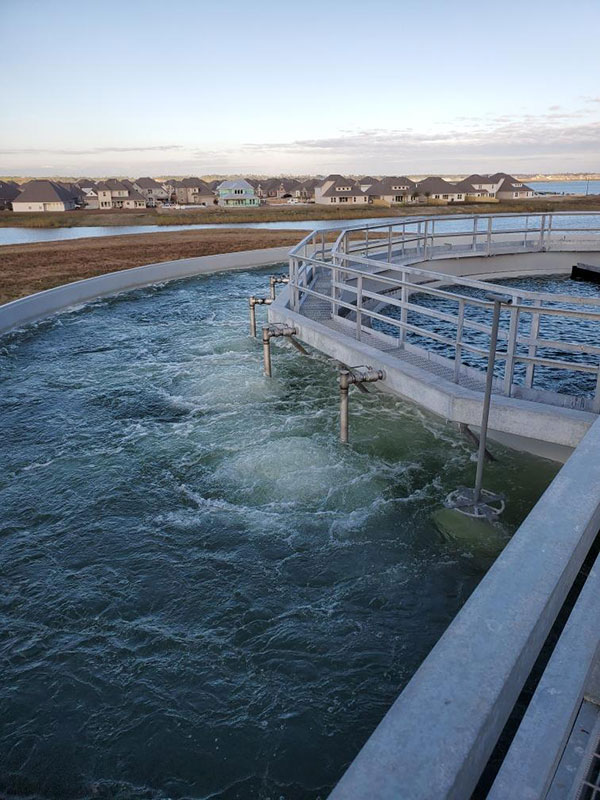
The conventional activated sludge (CAS) process is the most widely used wastewater treatment process in the industry. In CAS plants, solid waste is first screened and the screened wastewater is then directed to an aerated sedimentation tank. Here, aerobic bacteria in the sludge break down contaminants into harmless by-products. A secondary clarifier removes a portion of the sludge while returning the remainder to the aeration tank, replenishing it with active microorganisms. To achieve even cleaner and safer effluent, additional tertiary filtration and disinfection stages can be incorporated.
Advantages of Activated Sludge
Conventional activated sludge treatment is a proven workhorse relied upon for decades in the wastewater industry. Its well-established, robust, and cost-effective operation has made it the most widely adapted technology in the sector.
CAS offers remarkable adaptability, as it can be integrated with newer technologies such as advanced aeration, membrane bioreactor (MBR) systems, and even AI-driven enhancements. Its versatility allows it to handle varying influent conditions, making it well-suited for municipal wastewater systems. Additionally, the technology is scalable, accommodating the needs of small communities, large cities, and everything in between.
CAS provides significant environmental benefits for sustainable water management. By producing effluents with fewer pathogens and pollutants, it contributes to cleaner and safer groundwater, streams, and lakes. Additionally, the process enables various forms of resource recovery, including water reclamation for nonpotable uses, thereby reducing the strain on natural water resources.
Although air compression for aeration is the most energy-intensive process in CAS plants, advancements in aeration technology are significantly improving efficiency. These innovations include low-pressure diffusers, fine bubble systems, and advanced technologies that optimize energy use by adjusting aeration based on real-time data.
Recovered biomass from CAS plants sequesters carbon, and the process itself relies on the natural power of microorganisms, requiring fewer chemicals. In contrast, advanced oxidation processes often require substantial amounts of alum or ferric chloride, and MBR systems depend on chemicals to clean membranes and prevent fouling.
While MBR may surpass CAS in effluent quality, particularly where regulatory standards are stringent, and it can be installed in compact or challenging spaces, it comes with greater technical complexities and higher costs. When standard effluent quality is sufficient and space constraints are not a major concern, conventional activated sludge remains the most robust and cost-effective option.

Activated Sludge Case Studies

Harris County, Texas
A modular activated sludge treatment plant enabled a Harris County developer significantly reduce wastewater treatment costs through a flexible lease program. By phasing the plant installation to align community growth, the developer achieved a 75% saving on the initial investment.

Fort Bend County, Texas
An activated sludge treatment plant allowed a master-planned community in Fort Bend County, Texas, to avoid large upfront costs. By phasing the plant installation to align with development growth, the developer optimized capital expenditure and accelerated the project timeline.

Montgomery County, Texas
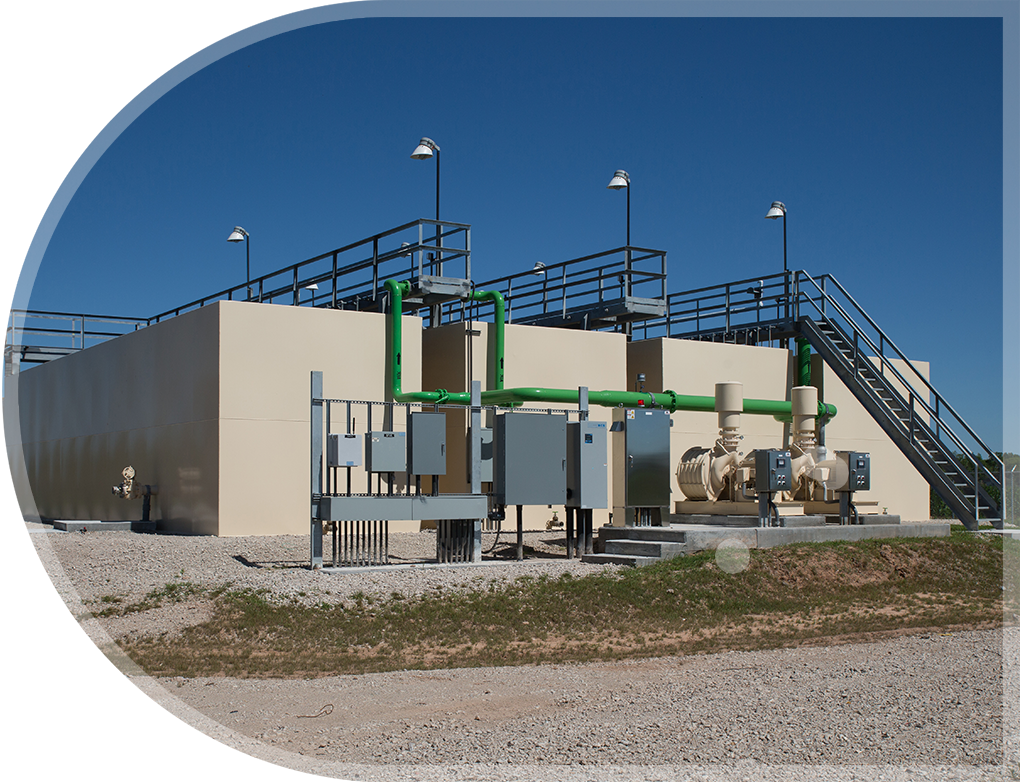
An activated sludge wastewater treatment plant was installed at a new development in Montgomery County alongside a decentralized water treatment facility. Through our Lease Plant Program, the customer streamlined infrastructure planning and secured sustainable water solutions.
Activated Sludge Frequently Asked Questions (FAQs)
Which pollutants, pathogens, and minerals can be reduced by conventional activated sludge?
- Biological oxygen demand (BOD)
- Chemical oxygen demand (COD)
- Total Suspended Solids (TSS)
- Fats, oils, and grease (FOG)
- Volatile organic compounds (VOCs)
- Nitrogen
- Phosphorus
- Bacteria
- Viruses
- Protozoa
- Certain heavy metals
- Some organic micropollutants including pharmaceuticals, personal care products, and endocrine-disrupting chemicals
- Some emerging contaminants including microplastics
What happens to excess CAS sludge?
Some sludge is recycled back into the CAS system to replenish microorganisms. The remaining sludge can undergo thickening, dewatering, and anaerobic digestion to reduce its volume. Chemicals may then be used to stabilize the sludge, reduce odors, and destroy pathogens. CAS sludge has agricultural value as a soil conditioner or fertilizer and can be applied directly to fields. Additionally, processes like composting and gasification/pyrolysis can convert CAS sludge into valuable products. Ultimately, dewatered CAS sludge can be disposed of in landfills or through incineration.
Why is oxygen important in the activated sludge process?
Aerobic bacteria play a crucial role in the CAS process, relying on oxygen to thrive and effectively break down contaminants and pathogens.
How efficient is the activated sludge process?
The activated sludge process is highly efficient at removing various pollutants from wastewater, typically achieving:
- 85-95% reduction in biological oxygen demand (BOD).
- 70-90% reduction in chemical oxygen demand (COD).
- 85-95% removal of total suspended solids (TSS).
- 50-90% nitrogen removal.
- 70-90% biological phosphorus removal, although additional processes may be required for optimal results.
- Significant pathogen reduction when combined with disinfection.
Advanced aeration and control systems can significantly improve energy efficiency, while effective sludge management enhances overall plant performance. Due to its maturity and reliability, the activated sludge process continues to be a cornerstone of wastewater treatment.
Request a Quote for Activated Sludge Wastewater Treatment
Contact Seven Seas to explore the possibilities of conventional activated sludge under financing arrangements that are tailored to your needs. Our experts can work with you to design the right CAS wastewater treatment system for your situation.
Seven Seas Water Group and its affiliates are dedicated to protecting our team members and the environment where we work, live, and operate. See what we’re doing to meet U.N. Sustainable Development Goals and achieve carbon net-zero status.
Connect With Seven Seas Water Group
Sign up for the latest news and trends in water production and wastewater treatment.