
What Is Activated Sludge?
For more than a century, conventional activated sludge (CAS) has served as the mainstay process for wastewater treatment worldwide. It remains the most widely used technology in the industry because it offers a proven, flexible, and cost-effective way to treat domestic and industrial wastewater.
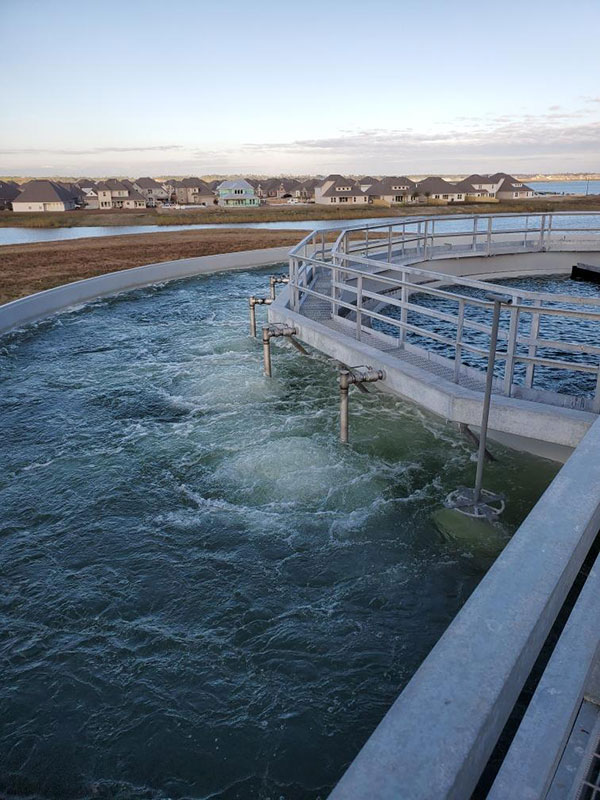
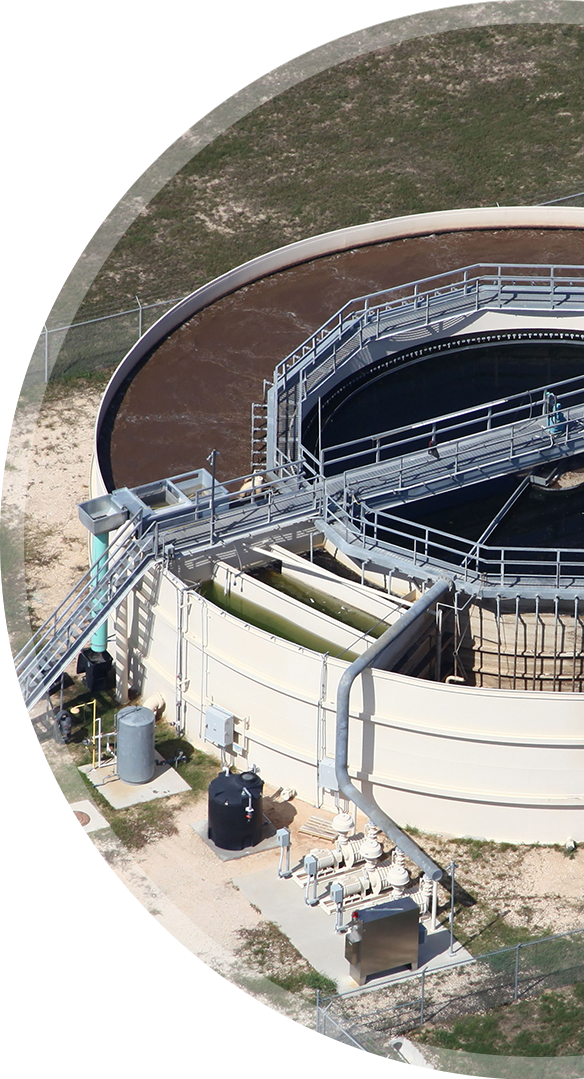
CAS plants rely on aerobic bacteria to break down contaminants into harmless by-products. In the first step of the process, wastewater is screened to remove large solids before being directed to an aerated treatment tank where bacteria-filled sludge begins breaking down contaminants. A secondary clarifier removes a portion of the sludge and returns the rest to the aeration tank, replenishing it with active microorganisms.
To achieve an even cleaner and safer effluent when called for, additional tertiary filtration and disinfection stages can be added.
Where Activated Sludge Is Used
The activated sludge process offers an efficient, sustainable solution for wastewater treatment, helping municipalities, developers, and industrial customers comply with environmental standards and protect public health.
It can support municipal wastewater systems, industrial wastewater applications, commercial facilities, and decentralized treatment facilities, that is, smaller, scaled-to-fit plants located near the point of need.
CAS plants can also help growing communities and phased developments align wastewater capacity with actual demand. And with a long record of wastewater treatment experience, more than 220 operating plants, and a 98.7% average plant availability, Seven Seas Water Group helps customers match proven treatment processes with the right delivery model for each project.
Advantages of Activated Sludge
Conventional activated sludge treatment has been a cornerstone of the wastewater industry for more than a century because of its proven reliability and cost-effectiveness.
Key benefits of activated sludge include:
- Proven wastewater treatment performance across a wide range of applications
- Adaptability for municipal, commercial, and industrial wastewater systems
- Ability to handle varying influent conditions
- Compatibility with technologies such as advanced aeration systems and membrane bioreactors (MBRs)
- Scalability for phased infrastructure growth
- Strong fit for decentralized and modular treatment configurations
- Support for water reuse and broader sustainability goals
Activated sludge can scale alongside community growth. When deployed in modular configurations, treatment capacity can be added in phases rather than built out all at once. This approach can help utilities, developers, and industrial users better align infrastructure timing with actual demand. When paired with Seven Seas’ Lease Plant Program or Water-as-a-Service® models, phased CAS deployment can also help reduce upfront capital pressure and preserve long-term flexibility.
CAS also supports broader sustainability goals by producing high-quality effluent that helps protect streams, lakes, and groundwater. In many applications, treated wastewater can also support nonpotable reuse strategies that reduce pressure on freshwater resources.

Where Activated Sludge Systems Face Challenges Today
Activated sludge offers proven wastewater treatment performance, but project teams still need to evaluate operational, site, and infrastructure considerations when selecting the right treatment approach.
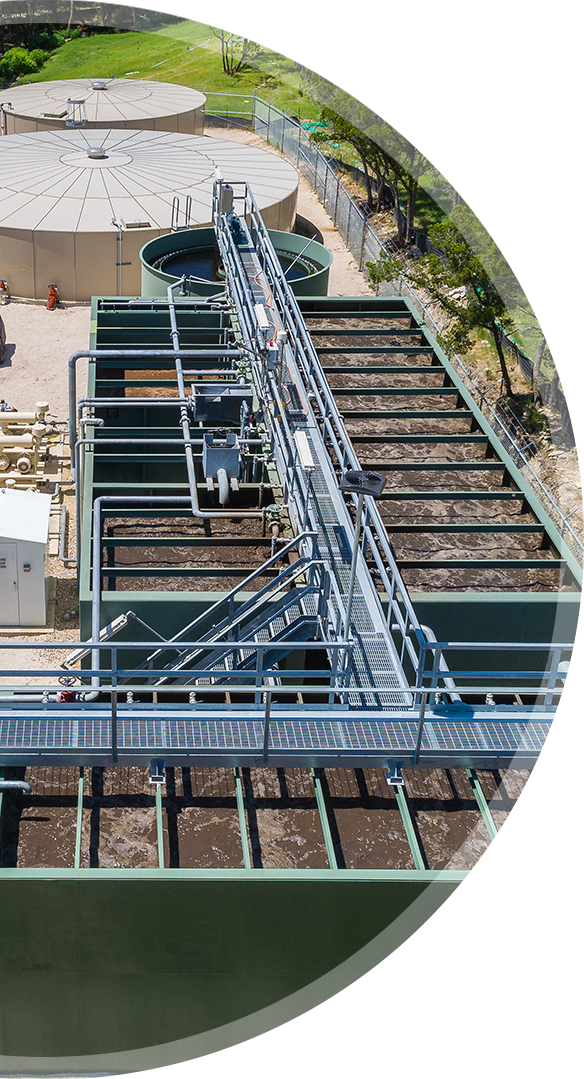
CAS systems generally require more land than compact MBR systems. Projects with limited acreage, tight setbacks, or difficult site layouts may require a smaller-footprint process or a customized configuration.
Aeration can also make activated sludge relatively energy-intensive compared to some alternative treatment approaches, although improvements in aeration equipment, controls, and process optimization continue to improve efficiency and reduce operating costs.
To maintain stable performance, CAS plants require knowledgeable operation, regular monitoring, sludge management, and ongoing process control. Some projects may also require higher effluent quality than a standard CAS system can provide on its own. In those cases, tertiary filtration, disinfection, nutrient removal, MBR, or other downstream treatment processes may provide the right path.
In many cases, the greater challenge is not the treatment process itself but how wastewater infrastructure is delivered. Conventional projects often require extended timelines across planning, permitting, procurement, financing, construction, commissioning, and staffing.
Many wastewater infrastructure projects need more than a treatment technology. They need a delivery strategy that aligns infrastructure timing, operational responsibilities, capital planning, and long-term compliance needs with the realities of the project.

Lease Plant Program vs. Water-as-a-Service®
For many customers, the challenge is not whether activated sludge works. CAS has already proven its value over the years. The more complex question is how to deliver the right system at the right time without overbuilding infrastructure before the capacity is truly needed.
Seven Seas helps customers address that delivery challenge through flexible delivery models, including its Lease Plant Program and Water-as-a-Service® (WaaS®) offerings.
Under the Lease Plant Program, customers can deploy modular activated sludge treatment systems without large upfront capital costs while maintaining responsibility for operations and maintenance internally. This approach can support phased growth, preserve cash flow, and help utilities and developers align wastewater infrastructure with actual demand.
Under the Water-as-a-Service® model, Seven Seas provides a fully integrated solution that can include design, financing, construction, operations, maintenance, monitoring, and long-term compliance support under a predictable service agreement. WaaS® can help communities reduce operational burden while securing a long-term infrastructure partner.
Both models help customers avoid overbuilding too early, accelerate timelines, and create more flexibility around long-term infrastructure planning.
Activated sludge remains a proven process. Seven Seas pairs that time-honored reliability with optimized delivery paths designed to meet today’s infrastructure demands.
Activated Sludge Case Studies

Harris County, Texas
A modular activated sludge treatment plant enabled a Harris County developer to significantly reduce wastewater treatment costs through a flexible lease program. By phasing plant installation to align with community growth, the developer achieved a 75% savings on the initial investment.

Fort Bend County, Texas
An activated sludge treatment plant allowed a master-planned community in Fort Bend County, Texas, to avoid large upfront costs. By phasing plant installation to align with development growth, the developer optimized capital expenditure and accelerated the project timeline.

Montgomery County, Texas
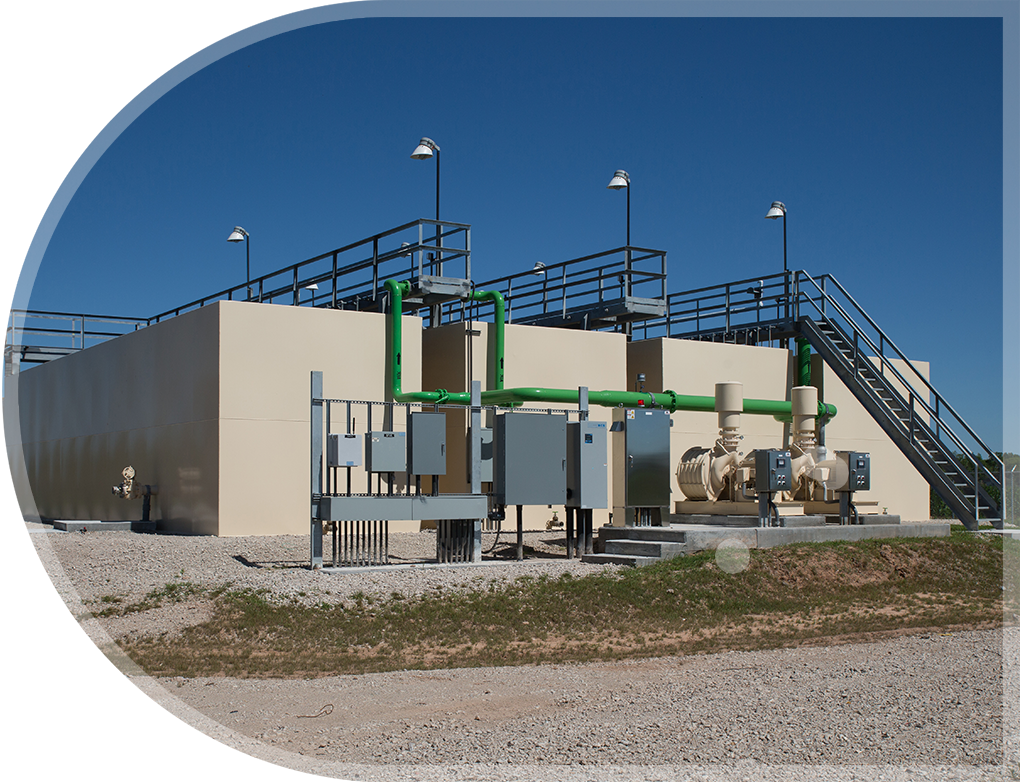
An activated sludge wastewater treatment plant was installed at a new development in Montgomery County alongside a decentralized water treatment facility. Through Seven Seas’ Lease Plant Program, the customer streamlined infrastructure planning and secured sustainable water solutions.
Activated Sludge Frequently Asked Questions (FAQ)
What happens to excess CAS sludge?
Ultimately, dewatered CAS sludge can be disposed of in landfills or through incineration.
Why is oxygen important in the activated sludge process?
Which pollutants, pathogens, and minerals can be reduced by conventional activated sludge?
When combined with a disinfection stage, CAS effectively reduces:
- Biological oxygen demand (BOD)
- Chemical oxygen demand (COD)
- Total suspended solids (TSS)
- Fats, oils, and grease (FOG)
- Volatile organic compounds (VOCs)
- Nitrogen
- Phosphorus
- Bacteria
- Viruses
- Protozoa
- Certain heavy metals
- Some organic micropollutants, including pharmaceuticals, personal care products, and endocrine-disrupting chemicals
Some emerging contaminants, including microplastics
How efficient is the activated sludge process?
The activated sludge process is highly efficient, typically achieving:
- 85% to 95% reduction in biological oxygen demand (BOD)
- 70% to 90% reduction in chemical oxygen demand (COD)
- 85% to 95% removal of total suspended solids (TSS)
- 50% to 90% nitrogen removal
- 70% to 90% biological phosphorus removal, although additional processes may be required for optimal results
- Significant pathogen reduction when combined with disinfection
Advanced aeration and control systems can significantly improve energy efficiency, while effective sludge management enhances overall plant performance. Due to its maturity and reliability, the activated sludge process continues to be a cornerstone of wastewater treatment.
Explore Activated Sludge Systems for Your Project
Contact Seven Seas to explore how conventional activated sludge can be implemented under delivery models tailored to your project. Our experts can work with you to design the right CAS wastewater treatment system for your situation.
Seven Seas Water Group and its affiliates are dedicated to protecting our team members and the environment where we work, live, and operate. See what we’re doing to meet U.N. Sustainable Development Goals and achieve carbon net-zero status.
Connect With Seven Seas Water Group
Sign up for the latest news and trends in water production and wastewater treatment.