
Turning seawater and brackish water into drinking water
Seven Seas Water Group offers unparalleled expertise in desalination, backed by decades of industry experience. With a robust portfolio of over 200 plants and an impressive 97% plant uptime, Seven Seas is a leading global provider in the field of desalination.
Now, as part of EQT, a purpose-driven global investment organization, Seven Seas has pioneered the Water-as-a-Service® (WaaS®) delivery model that removes significant financial obstacles, helping make desalination more sustainable than ever. WaaS® uses flexible financing — including build-own-operate (BOO) and build-own-operate-transfer (BOOT) contracts — to position Seven Seas as a money-saving desalination provider among reputable companies.
How Does Desalination Work?
Desalination is a process that removes salt and other minerals from seawater or brackish water, making it suitable for human consumption or irrigation. The most common method of desalination today is reverse osmosis (RO), which involves forcing salty water through a semipermeable membrane that allows water molecules to pass through while blocking salt and other impurities. This results in two streams: one containing fresh water that can be used for drinking or other purposes, and the other containing concentrated brine, which is typically discharged back into the ocean.

Operations, Maintenance, and Environmental Compliance
While reverse osmosis is the most cost-efficient desalination process available today, the cleaning, maintenance, and replacement of advanced membranes can be costly and resource-intensive. For many municipalities or industries, it makes sense to keep a specialized water company involved in operations and maintenance throughout the life of a plant. WaaS® does just that, keeping Seven Seas’ resources and experts with their plants over the long haul.
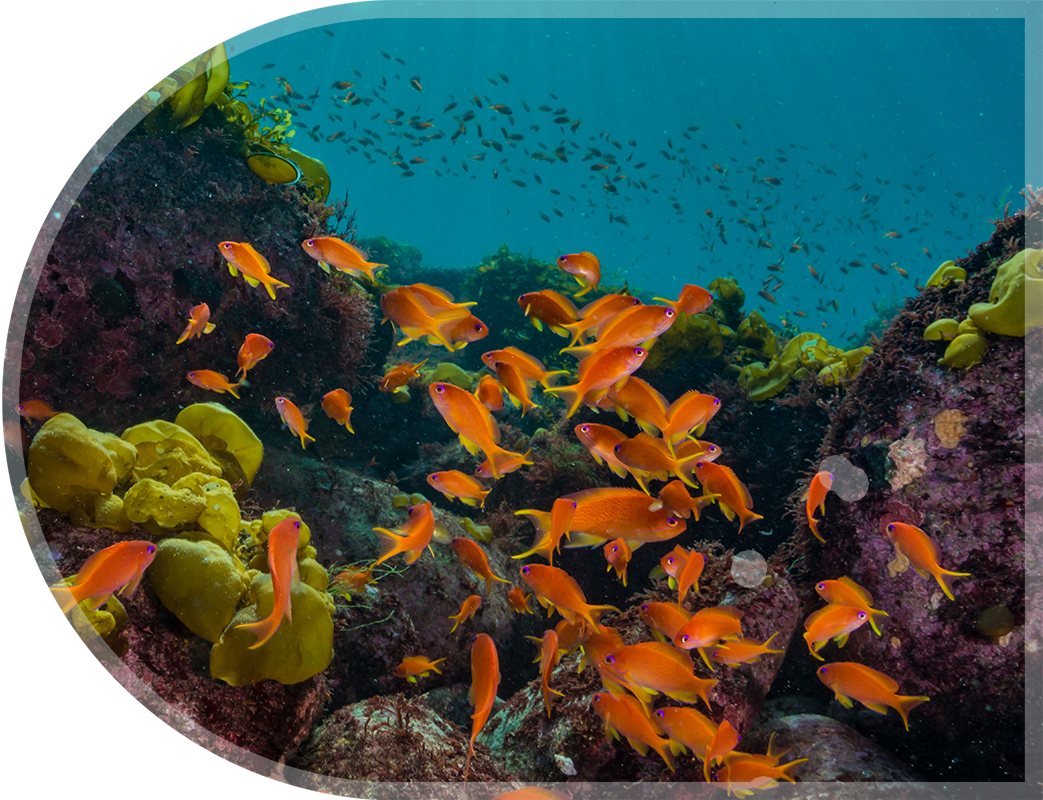
In some cases, desalination projects face questions about environmental impacts. The concentrated brine left over after desalination and the chemicals used to combat membrane fouling may require measures to mitigate ecological effects. The healthy coexistence of desalination and aquatic ecosystems begins with environmental impact studies to inform thoughtful siting of plants that avoid environmentally sensitive benthic ecosystems.
Seven Seas has developed innovations in seawater intakes to exclude turtles and other sea life. Brine diffusion into less sensitive areas with less sea life also mitigates impacts, and independent brine monitoring programs at our plants allow operators to control discharges if saline levels climb too high on the surrounding ocean floor. The many sustainability measures undertaken by Seven Seas have prompted a Harvard study that cites Seven Seas for its environmental responsibility in desalination.

Sources of Saline and Brackish Water
Coastal areas and islands often spring to mind as the most obvious locations for successful desalination plants due to ready access to seawater, and many large-scale seawater reverse osmosis (SWRO) projects have captured the spotlight.
But there is another potential lifeline for communities and industries struggling with water availability: brackish water desalination. “Brackish” describes water with a salinity of 1,000-10,000 ppm, which is between fresh water and seawater. It’s often found in underground aquifers.
Brackish water desalination (BWRO) is significantly less expensive than desalination of seawater. The extent of brackish water resources even in most parched and farthest-inland regions in the United States is only now becoming fully understood.
The U.S. Geological Survey estimates that in U.S. aquifers there is 800 times more brackish groundwater than the amount of fresh water the nation pumps annually. Extensive brackish and saline aquifers exist deep in the American West. And vast brackish aquifers have even been discovered under the ocean floor. Florida and other regions also have ample brackish groundwater that presents a lower-cost alternative to seawater.
Desalination Case Studies

Point Fortin, Trinidad
Residents in Point Fortin previously had water service limited to only one day a week. They urgently required a 24/7 water supply but were also concerned with safeguarding the marine ecosystem. The project faced challenges, including adapting pretreatment for varying water quality and managing a compact, 1.2-acre site. In addition to the need for new water lines across active roads, an unexpected oil discovery delayed the project, requiring eight months for resolution. Despite these hurdles, Seven Seas completed the desalination plant within 14 months of permitting under a public-private partnership agreement. Innovative intake screening protects marine life, while an environmental management program ensures effluent quality.


City of Alice, Texas
Our desalination plant in Alice, Texas, which is nearing completion, showcases the advantages of Seven Seas brackish water desalination. This project — the first public-private partnership brackish water desalination plant in the state — will give the town its own source of raw fresh water after years of having to bring it in from outside. This WaaS® project not only enhances resilience against drought but also relieves the City of Alice from operational and maintenance burdens, ensuring long-term cost savings.

Sandals, Emerald Bay
The Seven Seas seawater desalination plant at Sandals Emerald Bay in the Bahamas provides water for a luxury resort on the small, arid island of Great Exuma Cay. Producing a million gallons daily, 30% is shared with local residents, vitalizing the island’s economy and garnering community support. Additionally, Seven Seas implements a complete water cycle solution, treating and reusing wastewater for optimal efficiency, resilience, and environmental preservation. This approach maintains pristine beaches, sustains local waters, and irrigates the resort’s golf courses. When the BOOT agreement expired, Sandals Emerald Bay renewed the contract due to Seven Seas’ excellent plant operation and maintenance.

Desalination Frequently Asked Questions (FAQ)
How much does desalination cost?
While thermal distillation is expensive due to high energy costs, the more common reverse osmosis desalination cuts the total cost of desalination plants with its energy efficiency. But energy costs for water compression — as well as the cost of cleaning, maintaining, and replacing advanced membranes — keeps costs significantly higher than those associated with pumping water from traditional surface or groundwater sources. Final water prices, however, depend on many variables. Seven Seas is here to help evaluate your particular scenario.
What makes desalination difficult?
Water, composed of one oxygen atom and two hydrogen atoms arranged in a V shape, exhibits magnetic-like behavior due to its molecular structure and chemical properties. When sea salt ions, such as sodium and chloride, dissolve in water, water molecules eagerly bond with them, creating a strong attraction. Separating these bonded ions with specialized reverse osmosis membranes requires considerable energy. Another challenge is disposing of the concentrated brine left over from the process.
How many desalination plants are in the U.S.?
Since 1971, more than 400 municipal desalination plants have come online in the United States, with an estimated 200 or more currently operational. While the exact count remains uncertain, a significant portion of these facilities are located in California, Florida, and Texas.
What is the outlook for desalination?
Between 2022 and 2031, there is projected substantial growth in the global market for water desalination plants. With increasing demand for drinking water, oceans are anticipated to play a pivotal role in the 21st century, necessitating the rapid development of desalination capabilities. Some forward-thinking scientists have even proposed that using desalination to convert water from oceans for human use could mitigate sea level rise, with surplus water stored in reservoirs and lakes.
Updated Water-as-a-Service® Financing for Desalination
To take full advantage of updated seawater or brackish water reverse osmosis desalination without committing extensive organizational resources to operations and maintenance, consider Seven Seas’ Water-as-a-Service ® (WaaS®). WaaS® keeps planning, financing, construction, compliance, and long-term operations and maintenance in-house. Under performance-based WaaS® contracts, Seven Seas owns and operates desalination plants over decades-long contract terms, providing desalination by professionals at a guaranteed price and quality with no surprises.
Seven Seas owns and operates most of its plants, so they are built for reliability, aligning our interests with our customers’, keeping up our industry-leading plant availability record, and growing the long list of customers who choose to renew their relationships with Seven Seas long after the initial contract terms come to an end. Contact us to explore how desalination can make water scarcity a thing of the past.
Request a Quote for Desalination Water Treatment
Contact Seven Seas to explore the possibilities of desalination under financing arrangements that are tailored to your needs. Our experts can work with you to design the right combination of treatment technologies for your situation.
Seven Seas Water Group and its affiliates are dedicated to protecting our team members and the environment where we work, live, and operate. See what we’re doing to meet U.N. Sustainable Development Goals and achieve carbon net-zero status.
Connect With Seven Seas Water Group
Sign up for the latest news and trends in water production and wastewater treatment.