

Public-private-partnerships can free up resources for critical water utility repairs
The United States drinking water infrastructure has a network of 2.2 million miles of underground pipes that deliver treated water to homes. Many of these pipes were installed more than 50 years ago, even 100 years ago, and need replacement.
As these systems deteriorate, leaks contribute to a massive loss of treated water. The Environmental Protection Agency estimates that about 240,000 water main breaks cause disruptions in service and increase repair costs every year. These leaks waste precious resources and lead to higher costs for utilities and taxpayers while compromising water quality and risking public health. Addressing our aging infrastructure is critical to the reliability and sustainability of the nation’s water supply.
Water Systems Need More Funding
A 2023 study revealed that 20% of water pipes in the U.S. and Canada have reached the end of their useful lives but have not been replaced because of a lack of funding. According to Steven Barfuss, a research professor at Utah State University, this figure has risen from 8% in 2012 and represents a $452 billion shortfall.
Investment in drinking water infrastructure has not kept pace with the needs of aging systems, and current funding falls short. A solution to this is build-own-operate agreements. With BOO agreements, utility companies can tap into private sector expertise, optimizing operations while preserving public money for essential infrastructure upgrades and repairs such as improving water distribution networks and replacing underground pipes.
Cost and Risks of Water Leaks
According to the American Society of Civil Engineers (ASCE), the U.S. loses about 6 billion gallons of treated water each day because of leaky pipes and aging infrastructure. That’s 2.1 trillion gallons every year of treated water that does not generate revenue, resulting in the loss of billions of dollars. In 2019 alone, an estimated $7.6 billion of treated water was lost to pipe breaks.
Water main breaks and leaks also come with hidden costs. Leaks lead to significant waste of treated water that has already consumed energy during treatment and distribution. This means higher energy costs for utilities because more water must be treated and pumped to compensate for losses.
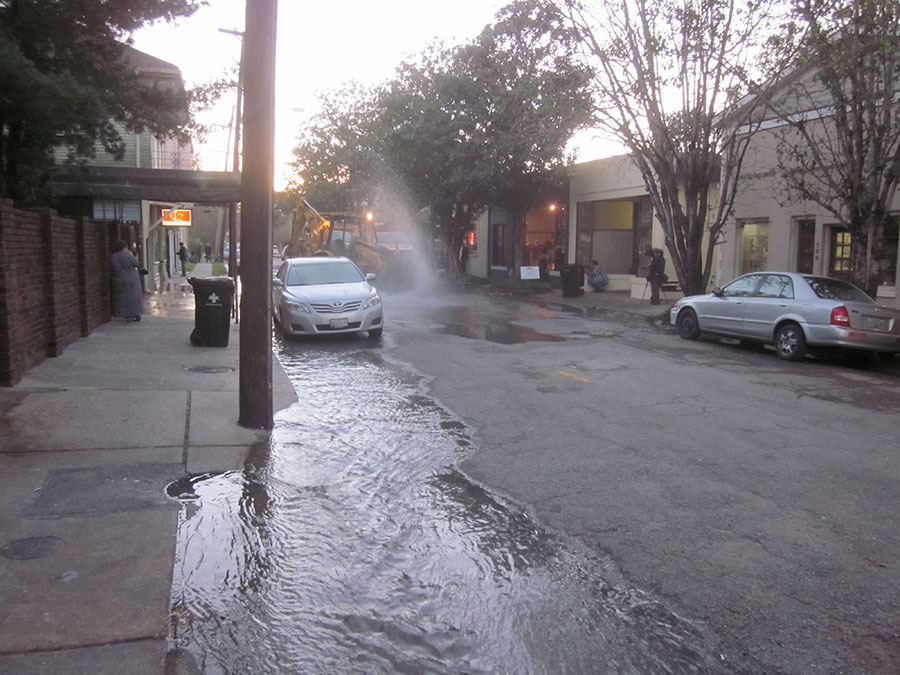
A broken water pipe disrupts traffic on a New Orleans street.
Pipe bursts and continuous leaks result in a significant outflow of water that can undermine roads, sidewalks, and other infrastructure. The constant flow from broken pipes can weaken foundations and cause sinkholes, leading to costly repairs beyond the water system, and affecting transportation networks and local economies.
Cracked Pipes Can Let in Pollutants
Compromised water pipes can also allow pollutants to enter and contaminate water supplies, possibly leading to violations of municipal water quality standards and costly fines from regulatory bodies like the Environmental Protection Agency, which enforces the Safe Drinking Water Act.
Contaminated water poses significant health risks, particularly to children, the elderly, and individuals with compromised immune systems. Breaks in water pipes often allow bacteria, viruses, and chemical pollutants to enter the water supply, which can cause waterborne illnesses such as gastrointestinal infections and cholera.
Water leaks can also cause soil erosion and habitat destruction. Eroded soil can weaken structural foundations and cause landslides, further affecting both the environment and infrastructure. Constant water loss can lead to flooding that harms local ecosystems, destroys plant life, erodes riverbanks, and damages the habitats of local wildlife.
The Role of Public-Private Partnerships (P3s)
Public-private partnerships (P3s) are essentially long-term infrastructure agreements between a public entity and a private company. They offer a strategic solution for water infrastructure challenges. As water utilities across the country grapple with aging infrastructure, funding limitations, and increasing demand, P3s can combine the strengths of the public and private sectors.
One financing solution is the build-own-operate model. With a BOO agreement, Seven Seas will finance and build a new treatment plant, or acquire and upgrade an existing plant, taking on much of the financial and operational burden. Under a BOO agreement, Seven Seas owns and operates the water treatment facility for an agreed-upon period, ensuring efficient management and performance.
Seven Seas’ P3 municipal water treatment contracts offer several benefits. Utilities have access to cutting-edge technologies and a team of water professionals. Our team focuses on optimizing performance, reducing operational costs, and improving water quality. That benefits public utilities, where the need for efficiency, sustainability, and compliance with environmental regulations is critical.
With a P3 contract, utilities are relieved of certain risks, such as construction delays, cost overruns, and operational failures. This sharing of risk allows utilities to focus on oversight and long-term planning while Seven Seas manages day-to-day operations.
With a BOO contract, utilities need not invest large amounts of capital or incur ongoing operational costs. Instead, they pay a fee based on the volume of treated water delivered. This frees public funds for critical infrastructure repairs and replacements, such as fixing leaking pipes and upgrading aging distribution networks.
Case Study: Successful P3 for Water Treatment in Alice, Texas
The city of Alice, Texas, collaborated with Seven Seas to develop a sustainable water supply that could withstand droughts and growing demand. Seven Seas privately financed the construction of a brackish water desalination facility, while the city provided public funding for the necessary wells and pipelines. Under this P3 build-own-operate-transfer agreement, Seven Seas took on the responsibilities of designing, building, operating, and maintaining the desalination plant for 15 years.
During this period, the company guarantees a specified volume of water at a fixed price. After the contract term, ownership of the plant transfers to the city. The city now has the capacity to treat 2.7 million gallons of raw water per day, with the option to expand if needed. This P3 agreement has allowed the utility to enhance the city’s water security by tapping into a sustainable supply while also reducing costs.
Water utilities may contact Seven Seas to learn more about our public-private partnerships and Water-as-a-Service® financing solutions that are designed to help them get the water infrastructure they need even when budgets are limited.
By partnering with the private sector in a P3 agreement, utility companies can address infrastructure challenges more efficiently, preserve public funds for essential repairs, and enhance operational performance. BOO agreements provide an effective solution for managing water treatment needs, allowing utilities to benefit from private investments and expertise while ensuring long-term sustainability and cost-efficiency.
Image Credit: ogonekipit/123rf