

Working with knowledgeable partners can help overcome the complexities of financial and technical challenges
Wastewater treatment plays an essential role in protecting public health, preserving the environment, and ensuring the sustainable use of water resources. The process involves the removal of pathogenic microorganisms and other harmful contaminants from wastewater to produce effluent that can be safely discharged into the environment or reused.
When designing a wastewater treatment plant, what factors must be considered?
Compliance With Regulations
To secure the required permits and approvals for the construction and operation of a wastewater treatment plant, it must meet specific regulatory criteria, so it’s crucial to understand local, state, and federal environmental standards for the quality of effluent discharged into bodies of water. Treated water must prevent the spread of waterborne diseases and protect aquatic ecosystems from pollution, preserving biodiversity and ecological balance.
Ensuring that a plant meets all relevant environmental regulations on permitted pollutant levels, treatment processes, and operational standards helps avoid legal penalties. Anticipating future regulations can prevent the need for expensive retrofits or upgrades down the line, resulting in significant cost savings over the plant’s life cycle.
Site Selection and Plant Layout
Selecting an appropriate site for a wastewater treatment plant is a critical decision that requires careful consideration to ensure optimal operation, compliance with regulations, and minimal environmental and community impact.
For optimal collection efficiency, the site should be located close to major sources of wastewater generation or existing sewer lines to minimize the cost of building and maintaining a network of sewer pipes. If the plant’s effluent is not being treated for reuse, the site should have access to a suitable water body for discharging treated effluent, siting it to minimize the risk of contaminating drinking water sources and recreational waters. Sites near sensitive ecosystems such as wetlands, protected wildlife habitats, and natural reserves should also be avoided.
Sites with high water tables may pose challenges for construction and increase the risk of groundwater contamination, and areas prone to flooding should also be avoided. Thorough environmental impact assessments and hydrogeological studies can help identify and assess these risks.
The site must also comply with local zoning regulations and land-use plans that dictate the location of industrial facilities. It should be far enough away from residential areas to minimize the impact of odors, noise, and other nuisances associated with treatment processes.
If the community served by the plant is expected to grow in the future, the chosen site should have enough space to accommodate future expansion of plant capacity, as well as potential upgrades and technological advancements. If space is limited, a compact decentralized wastewater treatment system may offer the perfect solution. Seven Seas Water Group often provides customers with preliminary information that typically includes a tank layout to help them determine the suitability of a site, buffer zone implications, or even to consider alternative solutions.
Treatment Process Selection
Wastewater treatment uses processes that are generally categorized into primary, secondary, and tertiary (or advanced) treatment stages, each addressing different types of pollutants.
Advanced wastewater treatment processes such as membrane bioreactor (MBR), and advanced oxidation processes (AOPs), produce high-quality effluent that can be safely discharged. The technology most suitable for the application will depend primarily on the characteristics of the incoming wastewater, the efficiency of the technology at removing contaminants, the required quality of the effluent, and the cost — including capital outlay and operational and maintenance costs.
Capacity and Scalability
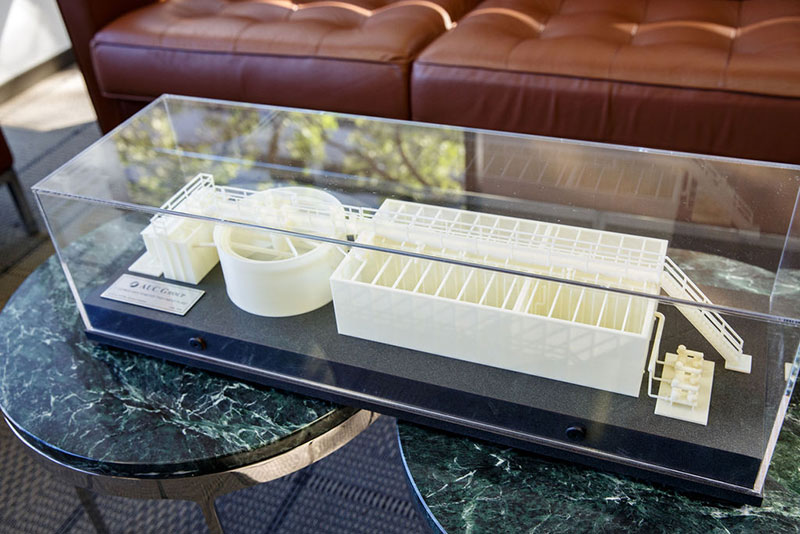
A scalable wastewater treatment plant can accommodate population growth and industrial development efficiently.
Because the size of the plant will directly affect its cost, it’s important to estimate present and future loads. The installation of a small plant that will serve current needs, but which can be easily scaled up in line with future population growth or industrial development, reduces the initial capital outlay required and offers flexibility to expand in the future.
Technology Integration
Advanced technologies such as MBR and AOPs play a critical role in enhancing treatment efficiency and improving monitoring capabilities. They incorporate innovative methods and tools to achieve higher levels of contaminant removal, greater operational efficiency, and better compliance with environmental regulations. Examples of technology integration include:
- Online Monitoring and Automation: Advanced sensors and online monitoring systems provide real-time data on key parameters such as pH, dissolved oxygen, turbidity, and contaminant levels, and enable continuous monitoring and immediate detection of any deviations. They use real-time data to dynamically optimize treatment processes such as aeration rates and chemical dosages.
- Machine Learning and Artificial Intelligence: AI and machine learning algorithms analyze historical and real-time data to predict system performance, identify potential issues before they become critical, and suggest proactive measures for maintenance and optimization. AI-powered support systems help make informed decisions, improving plant management and efficiency.
- Remote Control Systems: Internet of Things (IoT) devices enable remote monitoring of wastewater treatment plants, allowing operators to oversee multiple facilities from a central location, reducing the need for on-site personnel. IoT systems integrate data from various sensors and monitoring devices, providing a comprehensive overview.
Seven Seas offers a range of technologies that can be integrated into plants to facilitate monitoring, automation, and remote management. These include panels that can communicate with the customer’s specific SCADA system, as well as automation for specific processes. Our technical offerings are flexible and can be tailored according to customer-specific needs.
Energy Efficiency and Sustainability
Designing energy-efficient plants is crucial for reducing operational costs, minimizing environmental impact, and enhancing sustainability. Some key strategies to achieve energy efficiency and improve sustainability in WWTP design include:
- Implementing Advanced Treatment Technologies: MBR technology combines biological treatment with membrane filtration, which can operate at higher concentrations of mixed liquor suspended solids (MLSS), reducing the footprint and energy requirements of secondary clarifiers. Efficient biomass retention minimizes sludge handling and disposal energy needs. AOPs, on the other hand, generate highly reactive species, such as hydroxyl radicals, to break down organic and inorganic contaminants in wastewater, reducing the load on biological treatment systems and decreasing overall energy consumption.
- Energy-Efficient Equipment and Processes: Using high-efficiency motors and pumps that meet or exceed energy standards in a wastewater treatment system can result in savings.
- Using Renewable Energy Sources: Solar panels and wind turbines can be installed to generate renewable energy on-site, reducing reliance on external power sources. By incorporating battery storage systems, excess renewable energy can be stored for use during periods of high demand or low generation. Heat exchangers can be installed to recover and reuse heat within the plant, reducing the need for external heating sources. Anaerobic digestion of sludge can produce biogas, which can be captured and used to generate electricity and heat, offsetting the plant’s energy needs.
- Optimizing Aeration Systems: For smaller packaged plants, whose rate of return does not justify the incorporation of energy-efficient devices, more efficient aeration systems can help improve energy efficiency. Fine-bubble diffusers, for example, provide a greater surface area for oxygen transfer, reducing the energy required for aeration, while variable frequency drives (VFDs) on blowers and pumps allow for precise control of motor speed based on real-time oxygen demand, reducing unnecessary energy consumption.
- Wastewater Reuse and Recycling: Systems that recycle wastewater for nonpotable uses such as irrigation, industrial processes, and cooling, not only reduce the overall demand for fresh water but also the energy required to source and treat it.
Budget and Cost Considerations
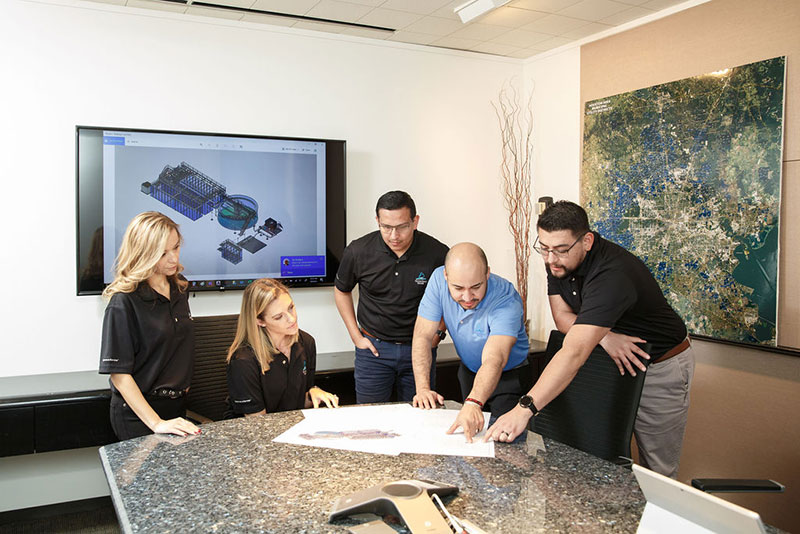
Securing funding is crucial for the planning, construction, operation, and maintenance of wastewater treatment plants, with various financing options available to support these essential projects.
The construction of a wastewater treatment plant requires a huge capital investment as well as ongoing operational costs, so financing is often the biggest hurdle to overcome. Securing funding for a plant is essential for its planning, construction, operation, and maintenance. Various sources are available, each with its advantages and considerations. They include utility revenue, government grants and loans, grants and donations from nongovernmental organizations and foundations, international financing sources (such as multilateral development banks and international aid programs), green financing, lease plant programs with the option to purchase, and public-private partnerships.
Seven Seas offers flexible short- and long-term lease agreements with the option to purchase, as well as Wastewater-as-a-Service partnerships. With our Lease Plant Program, customers can start with a smaller plant to meet current needs and budget, and add capacity as their needs expand. With Seven Seas partnerships, customers can get the infrastructure they need without any upfront capital investment. They just pay for the volume of wastewater treated.
Seven Seas Offers Wastewater Treatment Plant Planning, Design, and Operation
Designing a wastewater treatment plant is a complex exercise that requires careful consideration, so it’s advisable to engage with professional engineers and consultants to ensure a successful design process. Seven Seas’ team of wastewater specialists can offer sound advice and guidance throughout the process. We take care of everything from design and construction to operation and maintenance, ensuring safety and environmental regulatory compliance throughout the project.
Contact Seven Seas to learn more about our innovative wastewater treatment solutions and the financing options we offer.
Image Credit: bilanol/123RF
Hugo Salinas is the Project Manager of Design at Seven Seas Water Group. He oversees the internal design team in preparing engineering drawings and specifications for wastewater treatment plants during the preliminary and submittal phases. He is responsible for process design, technical specifications, design reports, bid proposals, and regulatory compliance, making him an invaluable asset to the company.