
Proactive Measures for Water Resource Management
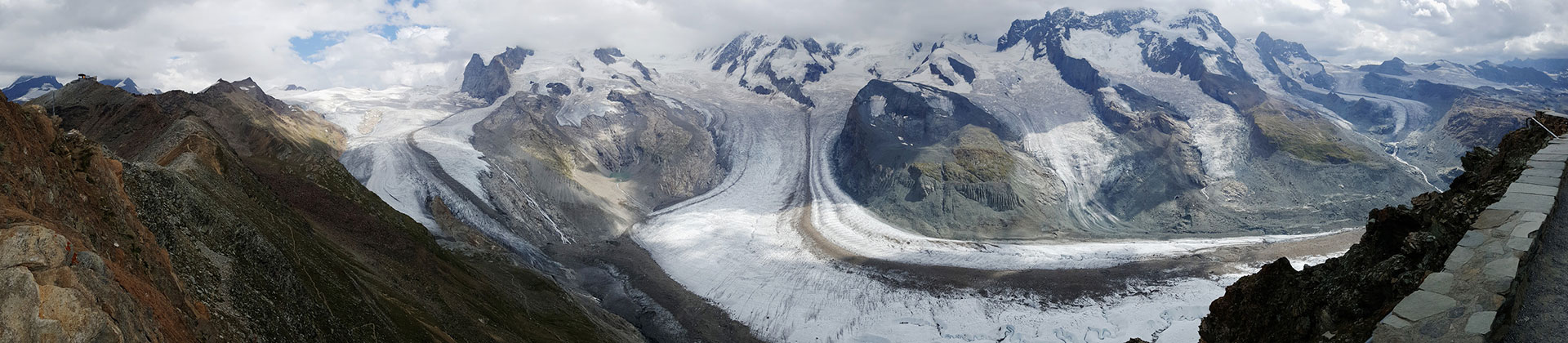
Melting glaciers across the globe lost about 255 billion tons of ice every year from 2000 to 2011 due to climate change, according to a major study in the journal Nature. The already alarming pace of glacier melt accelerated further in the next decade, with glaciers losing approximately 346 billion tons a year. In 2023, the last year the study analyzed, a record 604 billion tons of glacial ice melted, a radical change with the potential to cause devastating floods, droughts, landslides, and sea-level rise.
World Water Day 2025 — March 22 — will focus on the theme of glacier preservation. Why are glaciers important? Historically, glaciers and ice sheets have added ice in colder years and released meltwater in warmer years. The glacial mass sequesters fresh water and its slow melting helps even out river flows throughout the year, making water availability more predictable and flooding less likely. The historical pattern, however, may change for countless communities as rising air and ocean temperatures speed up the process.
While glacier preservation is the long-term goal, little can be done to stop their decline in the short term, so Seven Seas is observing World Water Day by discussing how advanced water and wastewater treatment can help communities adapt to the impacts of accelerating glacial melting as humanity grapples with climate change.
Dangers of Accelerated Glacial Melt
Melting glaciers cause significant sea level rise. Global sea levels could rise by as much as 43 inches (1.1 meters) over preindustrial levels by the turn of the next century and could stay that way or rise further in the future. In coastal areas, higher sea levels can cause saline intrusion into aquifers, making once-viable freshwater resources unusable without treatment.
At first, more glacial melt can be beneficial, increasing supplies of fresh water. Glacial melt increases river flows, providing abundant hydropower and fresh water, but communities that rely on shrinking glaciers must find other sources of water or face devastation when the glacial water plays out.
Switzerland is a good example of a country facing excessive glacial melt. It has more glaciers than any Alpine nation, and glaciers provide hydropower for more than half of Switzerland’s electricity. There is no shortage of water in Switzerland now. The Alps, however, are heating up faster than the global norm, and Switzerland’s glaciers will likely no longer exist by 2090.
What can nations do to prepare as aquifers become brackish and glaciers melt away?
Water Recycling’s Role
Establishing water-reuse infrastructure before meltwater flows disappear is one way to soften impacts considerably. Intensively treating wastewater with tested technologies and reusing it for nonpotable applications helps communities make the most of diminishing meltwater flows.
Decentralized treatment plants can dramatically increase the cost efficiency of water reuse programs. Smaller plants, scaled to fit need, are used in the communities they serve, keeping water local.
Modular, packaged options — featuring updated wastewater treatment technology in compact, mobile units — are ideal for decentralized strategies. For communities facing a reduced meltwater flow, a decentralized, scalable water reuse system offers climate resilience without the often crippling costs associated with large-scale infrastructure.
Adapting With Desalination
For communities that are losing their traditional groundwater sources to saline intrusion, brackish water reverse osmosis (BWRO) desalination offers a cost-effective solution. While seawater reverse osmosis (SWRO) is significantly more expensive than pumping fresh water from an aquifer or obtaining it from bodies of surface water, BWRO desalination is far less costly than SWRO desalination. And, the fact that brackish groundwater is far more plentiful than fresh groundwater makes it a sustainable option.
Newer BWRO technology is now available in modular units designed for decentralized use. A BWRO plant that provides drinking water from brackish sources, paired with a wastewater treatment system to treat community wastewater to nonpotable standards, packs a one-two punch against water risk in parched coastal and island communities facing sea-level rise.
Resilient Water Solutions for a Changing Climate
While water reuse and brackish water desalination represent the most cost-efficient solutions for many communities, water and wastewater treatment infrastructure assets can be costly in terms of both capital and operational expenditure. To address both, Seven Seas has developed Water-as-a-Service® (WaaS®), which uses modern contracts such as build-own-operate (BOO) for both public and private customers.
With WaaS®, Seven Seas handles all aspects of projects in-house. It builds or renovates treatment structures with no upfront investment and provides long-term operations and maintenance. The customer pays a predictable bill with no surprise charges. Seven Seas chooses only the most reliable equipment because we operate it, and WaaS® agreements are performance-based, so our interests are aligned with yours.
For even more flexibility, Seven Seas offers its Lease Plant Program. Full plants can be leased to serve temporary needs, such as when an existing plant is undergoing repairs.
With more than 200 plants in operation, Seven Seas is a trusted, long-term partner. We deliver exceptional service that ensures our customers see the value in renewing their contracts, knowing that alternative options simply don’t measure up. Our industry-topping 98.7% plant availability is a large part of what keeps them coming back, along with our 5-star GRESB ESG rating. Contact Seven Seas to experience the resilience, fiscal security, and peace of mind that comes with having a trusted partner at your side in the long run.
Image Credit: joaquincorbalan/123RF