

Facilitating collaborative agreements with municipal customers
A water sector public-private partnership (P3) is a long-term agreement between a public entity, like a municipal water utility, and a private water treatment company to deliver water or wastewater assets as well as the operation and maintenance services to support them. Two of the most popular P3 structures are the build-own-operate and build-own-operate-transfer contract models, although P3s have many other approaches.
P3s allow public partners to shift risk to a specialized company that is better prepared to manage it. They remove the burden of running the municipal water or wastewater treatment plant from the public partner. They optimize capital or even eliminate upfront costs. And perhaps most importantly, they align the interests of both parties.
P3s can be used to deliver energy-efficient desalination. While the cost of desalination can cause hesitation, many factors are making it more viable. Increasing water demand from growing populations and more frequent and severe droughts have driven up water costs. At the same time, the cost of reverse osmosis (RO) desalination has come down.
Brackish Water Less Costly to Desalinate
While seawater desalination is well-known as a coastal or island solution, a United States Geological Survey assessment has determined that 800 times more brackish groundwater than we pump every year still lies underground. Brackish water is also much less expensive to desalinate than seawater, and industrial or agricultural contaminants are removed by reverse osmosis. That is why small-scale desalination has been proposed for the parched West.
Communities in the American West and Southwest that are in the grip of long-term aridification stand to benefit from public-private partnerships. Water-scarce Arizona has weighed constructing a desalination plant in Mexico and pumping the water from the sea with a costly pipeline, yet brackish aquifers lie closer to home.
It is estimated that 310 million acre-feet of brackish groundwater is available in the Southwest region, from California’s Central Valley to the Rio Grande aquifer system. Cities need not be as large as Phoenix to use brackish groundwater. New modular, decentralized desalination units paired with P3 agreements can serve small service areas, commercial buildings, and even agriculture in the West, or wherever brackish groundwater supplies are ample.
Aging Water Infrastructure Needs Replacing
The nation is also struggling with a generation of wastewater treatment infrastructure that has reached its expiration date. While the Bipartisan Infrastructure Law contains the largest investment in water infrastructure in history, it is only a drop in the bucket compared to the need.
How does a region get the wastewater infrastructure it needs to protect its public health environment when capital is scarce? The P3 model can eliminate initial capital outlay for the public entity, cut water costs, and remove the burden of long-term operations and maintenance, compliance, staffing, local inventory storage, and upgrades.
Dispelling Common Public-Private Partnership Misconceptions
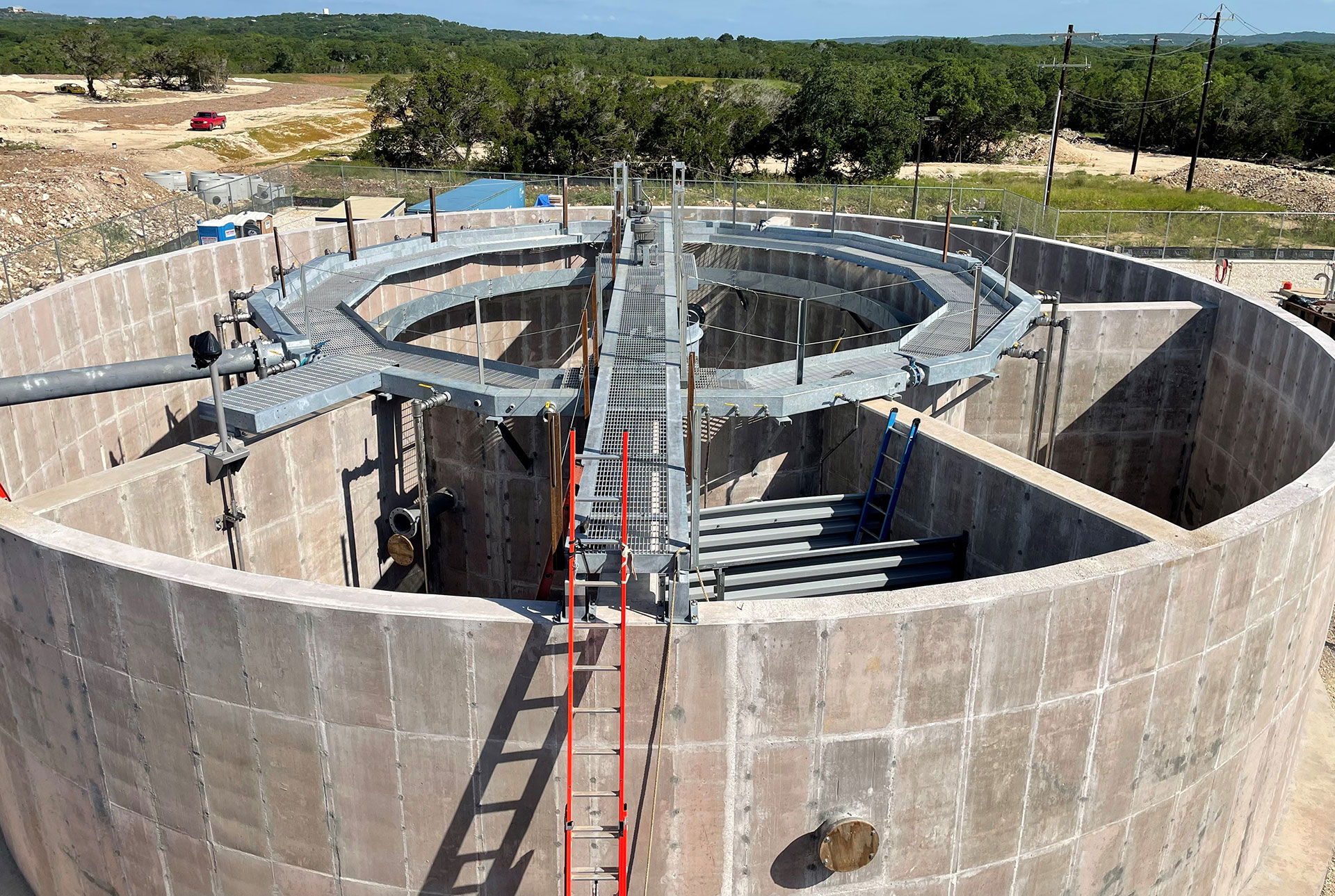
Through the P3 model, municipalities can overcome the financial barriers associated with wastewater treatment plant replacement.
A P3 is not privatization. Although many characteristics of P3s overlap, privatization usually refers to the transfer of asset ownership from public to private, where the public entity cedes all oversight and control to the new owner.
Today’s public-private partnership space has evolved. State governments in the U.S. and others around the world have recognized the benefits of P3s and have built legal frameworks to standardize and promote them. While P3s have been standardized, it is still important to deal with a reputable water treatment company that has a track record of customer satisfaction.
Although a municipality benefits from eliminating capital expenditures (CAPEX) with a P3, there is a misconception that the ratepayer will then see inflated water pricing. The first P3 brackish water desalination plant in Texas, however, will guarantee lower water prices from the start while eliminating CAPEX and financing costs. It is a win-win that means more control, not less, over the city’s water future for the citizens of Alice. Other cities in coastal regions with brackish aquifers or aquifers suffering from saline intrusion can benefit from following their lead.
Water Quality and Price Are Guaranteed
One important P3 evolution is performance-based contracts. Seven Seas’ Water-as-a-Service® (WaaS®) contracts, for instance, guarantee water quantity, quality, and price. If WaaS® fails to deliver, Seven Seas does not get paid. In this way, performance-based contracts incentivize excellence, from the planning stage onward.
Because Seven Seas operates P3 plants over long contract terms and then hopes to renew those contracts, it is essential to the business model to use the most durable, reliable equipment and satisfy customers with best-in-the-business plant availability. Before you go the traditional route, let Seven Seas help you explore the advantages of P3 water infrastructure development.
Image Credit: abdullah5048/123RF
Erik Arfalk is the Senior Vice President of Business Development at Seven Seas, specializing in innovative and sustainable water and wastewater solutions in the US and the Caribbean. Previously, he was the Chief Commercial Officer at Fluence Corporation, where he launched MABR. Erik has held leadership roles at Atlas Copco and GE in Europe and the US, starting his career in strategy consulting. He holds a Master's in Business Administration and Economics from Lund University, Sweden. Erik's passion for water solutions and his talent for building strategic partnerships have established him as a respected industry leader.