
Early planning is vital to finding a workable solution
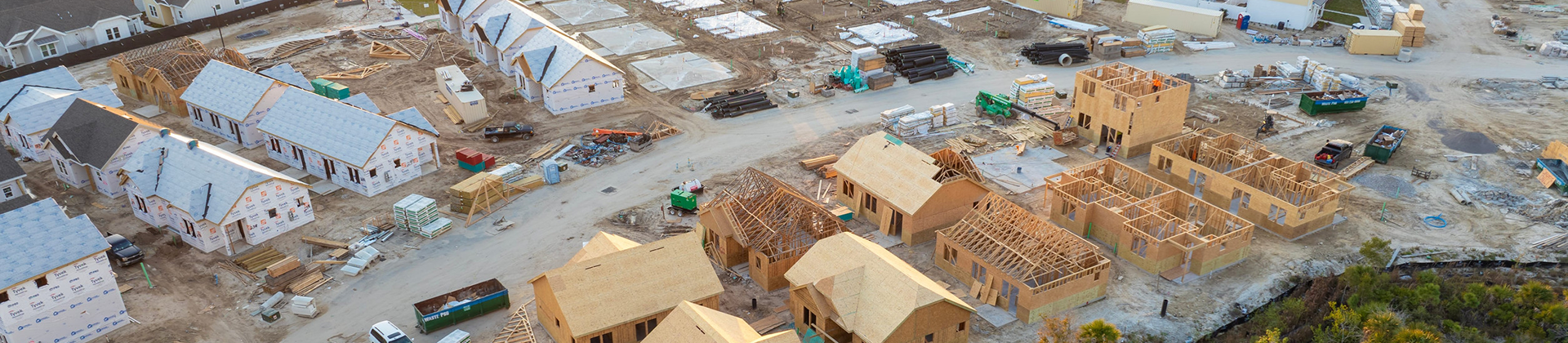
A developer finds a parcel that seems to have it all: access to major roads, booming market demand, favorable topography, ample acreage, nearby amenities, and room to expand. When the development team begins mapping homes, retail space, streets, and open areas, the location looks even better — except for one little issue. There’s no utility connection for drinking water or wastewater service.
Can a connection be provided? In principle, yes, but the nearby municipality might already be struggling to modernize assets for its existing service area. At this point, a developer might anticipate costly delays and added infrastructure costs.
Before walking away, however, the developer might want to evaluate decentralized treatment as an alternative. Building water and wastewater capacity on-site is not a match for every parcel; whether it is workable depends on site-specific factors such as an available water source, permitting, and cost.
In This Article
Roadblocks to Water Utility Service
A long distance to existing water mains can present a challenge via high pipeline costs, construction-related disruptions, and uncooperative topography. Procedural barriers also might need to be cleared before an extension proceeds. When these challenges make centralized expansion impractical, decentralized treatment can provide capacity closer to the point of demand.
Before counting on a public connection, the development team must evaluate the utility’s available capacity, the distance and route of new infrastructure, the improvements required, and permitting and approvals, as well as who will own, fund, and pay for the extension.
When the traditional path is impractical, on-site options can be investigated. First, confirm the presence of adequate groundwater or another source, and evaluate yield, raw water quality, permitting, and long-term availability. A source that appears ample may have problematic chemistry, making it important to evaluate the treatment needed to meet the target quality up front.
The water supply system might use filtration, disinfection, reverse osmosis, or other water treatment technologies selected for the water source rather than a one-size-fits-all design. Where brackish groundwater is the available source, reverse osmosis may be appropriate, with the system designed around source water quality, permitting, concentrate management, and long-term yield.
The Wastewater Problem Needs to Be Solved at the Same Time
A development without sewer service faces a parallel wastewater challenge, so treatment needs attention from the earliest planning stages. As with the water supply problem, on-site (decentralized) treatment can be a viable option, though it is not automatic. Whether it works depends on jurisdiction-specific requirements for disposal or discharge, groundwater protection, monitoring, and state and local permits, including an NPDES permit where a discharge to surface water is proposed. Rather than a one-size-fits-all package, the system should be sized and designed around the development’s service area, treatment requirements, and anticipated growth.
Planning drinking water, wastewater treatment, and potential reuse together can help avoid conflicts between systems and identify opportunities to use treated wastewater for nonpotable demands, where regulations and site conditions allow.
Evaluating a site outside an existing utility service area?
Talk with Seven Seas about water and wastewater infrastructure options for your development.
Build for the Development You Have Today — and the One Coming Tomorrow
A build-all-at-once project starts with full capacity on day one, and so does loan servicing. That might mean years of paying for stranded capacity. A community that will build out over years, however, does not need every gallon of treatment capacity immediately. Treatment can be phased alongside development, adding capacity as new units go on the market.
The phased approach requires a development team that has planned for how later phases will connect, what easements and site space will be needed, and how the original infrastructure can be expanded without forcing a complete restart. Phased or package treatment systems can support staged capacity growth, but only where hydraulics, future tie-in points, permits, and other issues are planned for. If a gap remains between when development starts and when permanent capacity is ready, interim or temporary capacity is a decision point worth evaluating early, including how and when it will be phased out.
Decide Who Will Own, Fund, and Operate the Infrastructure
Infrastructure planning also requires decisions about who will fund, own, operate, and maintain the system over its useful life. A developer may retain ownership, transfer infrastructure to a public or utility entity where possible, or pursue another delivery structure. Each approach affects upfront capital requirements as well as long-term responsibilities for operations, staffing, maintenance, regulatory compliance, and system upgrades.
Those considerations can also affect development economics. Building treatment infrastructure through a traditional capital model can require significant upfront investment, while leasing or service-based models may offer alternatives depending on the project.
Options include developer ownership with eventual transfer to a public utility, long-term leasing, and service-based structures such as public-private partnerships and build-own-operate arrangements. Each structure allocates ownership, operation, financing, and performance risk differently.
Water-as-a-Service® (WaaS®) is Seven Seas’ service model for water treatment, wastewater treatment, and reuse infrastructure. Under a long-term partnership, Seven Seas can design, build, operate, and maintain the system with single-partner accountability. For customers who prefer to operate and maintain their own systems, or who are not ready to commit to a long-term structure, the Lease Plant Program can provide another route to meet current needs or add capacity in phases without limiting long-term options.
Water and wastewater decisions belong in early due diligence, alongside road access, grading, utility studies, and entitlement planning. A site that sits outside a utility’s service area is not automatically unusable, but confirming a workable water and wastewater path requires early evaluation. Schedule a consultation with Seven Seas Water Group to discuss your site and explore water and wastewater infrastructure, phasing, and delivery options for your project.
Image Credit: bilanol/123RF