

A long-form analysis of how history shaped today’s systems—and why uncertainty now demands a different approach
While the roads and bridges that connect us are obvious, water infrastructure lies mostly out of view, with the pipelines transporting water and wastewater buried underground and treatment plants tucked into wooded areas off main streets—quietly supporting daily life until something goes wrong.
In this in-depth analysis of America’s water infrastructure, we examine how past investment cycles have contributed to today’s vulnerabilities and why flexibility, alternative financing, and decentralized delivery are becoming essential across both water supply and wastewater treatment systems.
Why Water Infrastructure Is at a Pivotal Point
America’s water systems are among the most advanced in the world. But they were built decades ago when population numbers were significantly lower, climate fluctuations were less volatile, and water demand was more predictable. These systems are starting to show their vulnerabilities. They were designed in an era of predictable, linear growth, making it relatively easy to project demand.
Fast-forward to today’s reality, which is far more volatile and much less predictable. Climate extremes have led to fluctuations in water availability, with droughts straining supplies on one hand and on the other, flooding overwhelming treatment plants and compromising water quality. Population growth is uneven and driven by migration, resulting in rapid expansion in some regions and stagnation in others.
Regulatory requirements are evolving but municipalities often lack the funding for upgrades. Compounding this, water-hungry industries such as data centers and semiconductor manufacturing are rapidly expanding and can drive up water demand almost overnight, throwing long-range forecasts completely out of whack.
Nowhere is this more evident than in wastewater systems, where aging collection networks and treatment plants face tightening nutrient, PFAS, and reuse standards—often without the staffing or capital required to respond quickly.
With these new realities, communities face a central question: What does history teach us about building water infrastructure that can endure when the future is increasingly uncertain?
The answer is not to build bigger, more expensive systems, but to build resilient ones that have the flexibility to adapt as demand and conditions change.
The Foundations: Infrastructure Built for Permanence

Early U.S. water and wastewater systems were designed to serve dense urban centers and protect public health, with infrastructure built for permanence under assumptions of steady, predictable growth.
America’s water infrastructure was born out of necessity. In the 19th century, rapid population growth in large cities such as New York, Boston, Washington, and Philadelphia left the rudimentary water infrastructure with insufficient capacity to meet the rising demand. This infrastructure consisted largely of shallow wells and small reservoirs dotted around the city. Communities were exposed to contaminated groundwater, open sewers, and waterborne disease, with typhoid, cholera, and dysentery outbreaks posing a significant public health threat.
Cities responded by investing in aqueducts to bring higher-quality water from distant sources, constructing storage dams and centralized treatment facilities, and building sewer systems to dispose of wastewater away from homes. These systems were designed to serve dense urban cores, helping prevent the spread of disease and protecting public health. They were built to last for decades of gradual, continuous growth.
The investments paid off. Communities had access to a reliable supply of safe drinking water as well as transformational improvements in sanitation. Mortality rates dropped, urban populations expanded, and economic productivity grew. The assumption was that tomorrow would look much like today, only bigger and slightly more demanding.
The Postwar Boom: Scaling for Growth, Not Flexibility
Following World War II, America experienced unprecedented growth, with economic expansion and suburbanization on a scale never seen before. The government supported this expansion by investing heavily in utilities, highways, and housing. Utilities built huge, centralized treatment plants, extending pipelines over greater distances to serve newly developed areas. They designed systems to serve populations that were projected to grow steadily for decades.
With planning models typically using 30- to 50-year population forecasts, the emphasis was on building large, oversized systems that catered to future demand rather than expanding repeatedly as more capacity was needed.
This “build once, build big” philosophy had clear advantages in an era of consistent growth. It reduced the need for frequent construction, simplified operations, and supported large-scale development. What these systems lacked, however, was flexibility. Systems were optimized for peak projections, which might be reached decades later, and once built, they were difficult to scale incrementally, relocate, or adapt to changing conditions.
Capacity became king at the cost of flexibility. That lack of flexibility wasn’t a problem as long as growth kept track with projections, but when these figures no longer aligned, it became harder to ignore.
When Forecasts Failed: The Cost of Over- and Underbuilding

Large, centralized treatment plants were designed to meet long-range projections, but when growth diverged from forecasts, communities were left managing the financial and operational consequences of rigid capacity.
Forecasting is essential in infrastructure planning, but errors are inevitable and can be costly. When population growth occurs in spurts or suddenly declines, it is much less predictable and harder to plan for, leaving communities with systems that either exceed or don’t meet their capacity needs.
In communities that overbuilt, unused capacity became a long-term financial burden. Utilities carried debt on infrastructure that was only partially utilized, and costs were passed on to unhappy ratepayers.
In communities that underbuilt, treatment plants hit regulatory or hydraulic limits sooner than expected, so that development stalled and economic growth slowed until treatment capacity could catch up. In wastewater systems, these limits often trigger immediate regulatory exposure, development moratoria, or emergency upgrades, leaving communities with little flexibility once capacity is exhausted.
In both scenarios, the problem wasn’t poor planning; it was the rigid infrastructure that lacked the flexibility to expand at the same pace as the community it served.
New Pressures the Past Never Accounted For
Today’s water systems face challenges that infrastructure designed decades ago simply wasn’t able to deal with.
- Climate volatility: Water systems were designed around “average conditions,” which today no longer apply. Extreme weather events and climate change are affecting water availability and quality. Droughts strain water supplies and cause contaminants to become more concentrated, while floods overwhelm wastewater collection systems and treatment plants, potentially contributing to water contamination. As a result of these climate extremes, source water quality is shifting, forcing utilities to adapt their treatment processes, often at a greater cost.
- Migration and development patterns: Population growth is no longer evenly distributed across the country. Some regions, such as the Sun Belt, are expanding rapidly, while growth in other regions is slower or even declining. Infrastructure built years ago is often located in areas where demand used to be high rather than where demand is emerging. These changing migration patterns can leave existing assets underused while creating demand in areas that don’t have the capacity.
- Regulatory acceleration: New standards regulating nutrients, PFAS, and water reuse are being implemented rapidly, adding complexity, particularly for wastewater utilities that must upgrade treatment processes while continuing to meet daily discharge requirements.
- Industrial and commercial demand surges: The emergence of new industries, from semiconductor manufacturers to AI data centers and lithium processing, often are concentrated in industrial or commercial hubs and can dramatically transform water demand in a very short timeframe. These industries require a quick, reliable supply of high-quality water on a vast scale that is difficult for traditional infrastructure to deliver.
Traditional Infrastructure Models Struggle Under Uncertainty
The traditional water infrastructure model prioritizes a certainty that no longer exists. This approach requires long permitting and procurement timelines that can take years, delaying development and economic growth. By the time a plant is completed, demand might have shifted once again. The approach of overbuilding large treatment plants to accommodate future growth requires upfront capital investment, which is financially risky if growth is slower than expected. Additionally, these plants have large, inflexible footprints and are difficult to modify once built.
In periods of uncertainty, municipalities are often reluctant to invest billions in expansions that may sit underutilized for years. That hesitation leaves developers waiting on capacity before projects can move forward and communities caught between urgent needs and financial risk. As uncertainty grows, the priority should shift away from precision forecasting and toward the ability to adapt.
A Shift in Strategy: Designing for Adaptability, Not Perfection
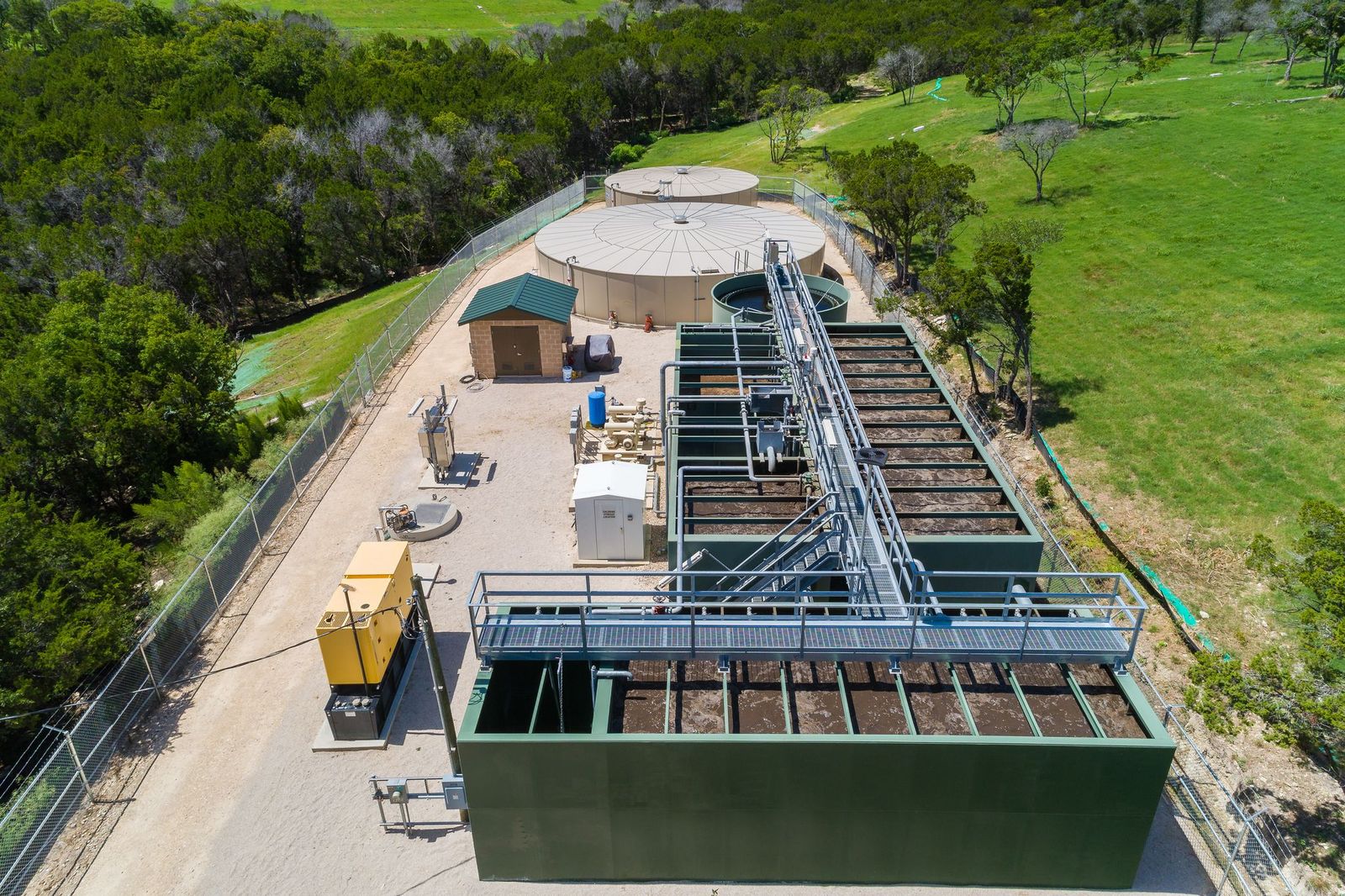
Decentralized and modular treatment systems allow communities to add capacity where and when it’s needed, supporting phased growth, faster deployment, and long-term regulatory compliance.
Water and wastewater infrastructure planning must move away from pursuing perfect long-term forecasts and instead focus on flexible treatment systems built to adjust as conditions change.
Some of the key principles that are reshaping infrastructure planning today include:
Modular vs. monolithic systems. Municipalities are embracing smaller, decentralized systems over larger, centralized facilities. Modular systems allow communities to start with a small treatment plant that can be expanded or upgraded in line with growth or as treatment needs change, simply by adding modules.
Phased capacity vs. single-stage buildouts. Rather than overbuilding upfront, systems are expanded in stages to match real demand.
Performance-based delivery vs. ownership-based risk. Instead of the traditional ownership model that requires significant upfront investment, municipalities are turning to performance-based contracts, such as Build-own-operate (BOO), where a professional service provider builds, owns, and operates the plant for a fixed monthly fee. This shifts financial, operational, and compliance risk away from the municipality while ensuring reliable access to clean water and safe sanitation.
Adaptable, future-ready infrastructure can not only be deployed faster, but it can also be deployed where growth occurs and where infrastructure is most needed. It can be expanded as demand grows or upgraded to comply with evolving regulatory standards. And it can be delivered and financed through flexible financing arrangements that reduce the financial risk associated with forecast error.
What a Future-Ready Water Strategy Looks Like
A futureproof water strategy doesn’t require accurate projections and predictions but offers the flexibility to adapt to varying conditions, so systems continue to function optimally in any scenario.
The following framework can help guide executives, planners, and policymakers in creating a resilient water management strategy:
- Build to grow. Match infrastructure to real demand, not projected growth alone.
- Decentralize strategically. Place treatment plants in areas that are experiencing high growth and closer to where water is used and generated, reducing the need for expensive pipelines connected to distant treatment plants.
- Shorten time to service. Modular, prefabricated systems allow for water and wastewater treatment plants to be deployed in a matter of weeks or months rather than years or decades. In today’s fast-paced world, rapid delivery can support a region’s growth, avoiding delays that stall development and economic expansion.
- Shift risk away from communities. Partner with a professional service provider who guarantees a predetermined quantity and quality of treated water or wastewater for a fixed monthly fee. This not only alleviates the financial risk but also the operational and compliance risks, while speeding up delivery.
- Design for change. Regulations, water quality, and demand will continue to evolve, requiring systems that are designed to adapt so they continue to function efficiently regardless of what the future brings.
The Next Chapter of American Water Infrastructure
America’s existing water systems don’t have design flaws. They were built in a different era defined by stability and linear growth, and have served their purpose well. In today’s rapidly changing world, it would be a mistake to assume that this stability will return. Instead, we need water and wastewater systems that have flexibility built in.
The next generation of water infrastructure won’t be judged solely on its size, lifespan, or engineering performance, but on how quickly it adapts to change, how well it manages risk, and how effectively it supports growth without overcommitting resources. Many communities are already experimenting with alternative delivery and financing models that prioritize flexibility, speed, and long-term compliance over fixed assumptions.
Image Credit: pramotephotostock/123RF