

Whether produced by seawater or brackish-water desalination, byproducts must be handled in an environmentally conscious way
Key takeaway:
• Responsible concentrate management allows desalination to expand water supply without harming local ecosystems.
• Brackish water desalination offers a lower-energy, inland solution for drought resilience.
• Seven Seas Water Group’s Water-as-a-Service® model delivers sustainable desalination with no upfront cost.
Reverse osmosis desalination is a trusted method of converting seawater and brackish water into drinking water, but it does come with some challenges. For example, as advanced membranes remove salt, they produce a byproduct that’s variously called concentrate, brine, or reject. Every desalination plant produces it, and responsible operators manage it with a clear focus on safety and long-term stewardship.
In the United States, brackish groundwater is abundant: A conservative estimate is that nationally, there is 35 times more available brackish groundwater than the amount of fresh groundwater used in a year, so it makes sense to learn how to use it responsibly.
Through brackish water desalination (BWRO), communities can secure reliable water supplies and greater water independence while protecting local ecosystems with a solid understanding of how to handle concentrate.
Comparing Brackish Water and Seawater
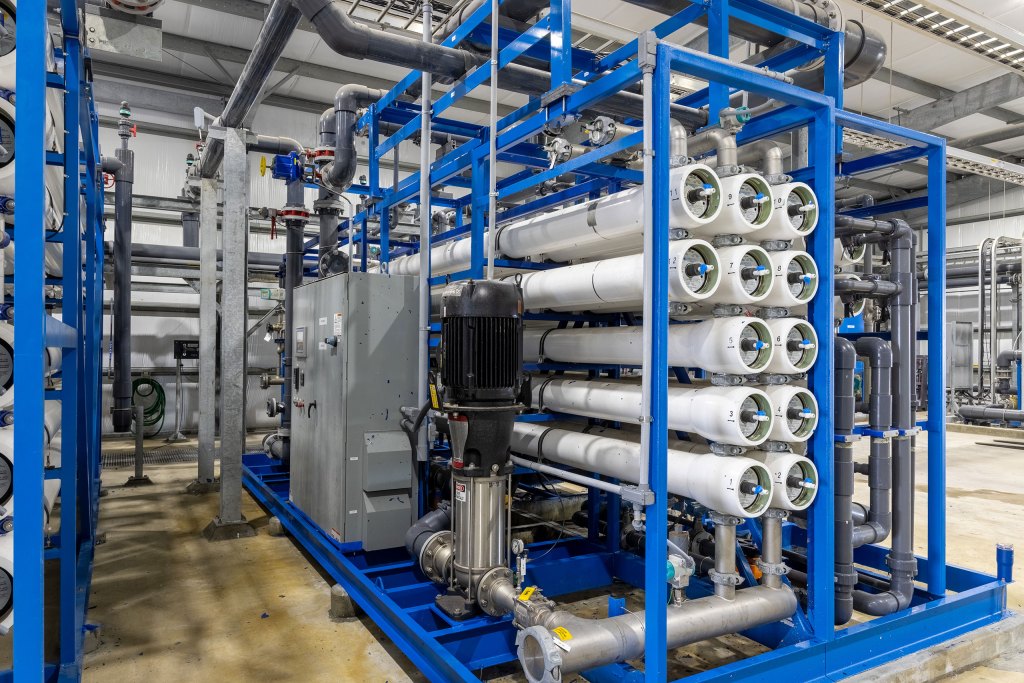
BWRO systems use lower pressure and energy than seawater desalination, producing a lower salinity concentrate stream while delivering reliable drinking water supplies.
Brackish and seawater desalination can both be accomplished with reverse osmosis, but the processes start with very different salinity levels. According to the U.S. Geological Survey, seawater contains an average of about 35,000 ppm total dissolved solids, while levels in brackish groundwater fall between 1,000 and 10,000 ppm. Because brackish water contains far less salt, it requires lower pressure and less energy to treat, and it produces a concentrate stream with lower salinity.
As a result, brackish desalination is generally more affordable and delivers a higher recovery rate—often producing 70–90% drinking water from each gallon of source water, compared to 35–50% for seawater desalination. This means communities can generate more usable water at a lower cost, making brackish desalination an especially attractive option for inland regions facing drought and population growth.
Both approaches remain essential tools for long-term water resilience, with seawater desalination supporting coastal regions with limited freshwater resources, and brackish groundwater desalination helping inland communities stabilize supply while dealing with drought and growth. The right choice depends on local geology, available water sources, and the needs of the community.
Responsible Concentrate Management
Desalination plants use several well-established methods to manage concentrate safely, and each method is evaluated and permitted through a regulated environmental review. In coastal communities, concentrate can be diffused and discharged into a bay or the sea with a properly sited outfall. Far inland, operators rely on deep well injection, controlled surface water discharge, blending and reuse, or high-recovery — zero liquid discharge (ZLD) — systems, depending on local geology and water quality needs. In order to confirm that concentrate remains compliant, regulators require detailed monitoring plans that track water quality before discharge occurs.
Concentrate management continues to evolve. In the design phase, siting outfalls in less productive ecosystem areas can be a key first step in protecting the environment. Modern outfalls are designed to ensure rapid dilution before the concentrate mixes into receiving waters, which reduces near-field effects and protects coastal ecosystems. Inland systems also continue to benefit from higher recovery technologies, which reduce concentrate volume and create new opportunities for water or resource reuse. These improvements expand the number of sites where brackish desalination is both feasible and environmentally responsible.
In its plants, Seven Seas Water Group takes concentrate management seriously. A study by the Harvard Graduate School of Design Zofnass Program praised one Seven Seas plant, saying that it “performs above the industry norm both in producing freshwater that is of exceptionally good quality and in monitoring its effluent into the sea.” It concluded that the project creates a clear net positive impact for the surrounding community.
Desalination and Future Water Security
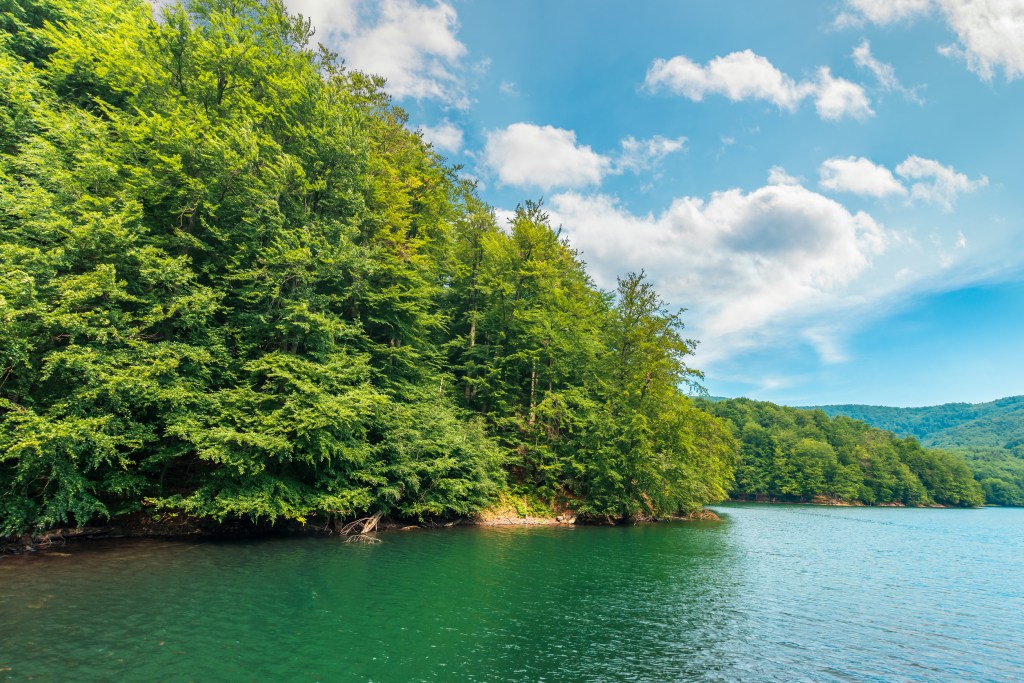
Sustainable desalination practices help protect local lakes, rivers, and aquifers while providing a dependable water supply for growing communities.
Desalination has become a reliable part of long-term water planning for communities that face drought, growth, or limited freshwater options.
For example, in Alice, Texas, Seven Seas provided a BWRO plant to help the community break free of competition for a distant water source that had become more costly and less available during recurrent drought and increasing demand. Seven Seas delivered the plant at no upfront cost under a Water-as-a-Service® agreement in the first BWRO public-private partnership in the state. Not only did water prices drop immediately, but Seven Seas guaranteed the prices long-term, which also included operations and management. Water-as-a-Service® can be used to deliver projects at virtually any scale.
Both seawater and brackish groundwater desalination have the ability to strengthen resilience by giving communities control over a consistent water supply rather than depending on rainfall, overdrawn aquifers, or distant resources. Continued advances in reverse osmosis membranes, energy recovery devices, and modular plant design keep improving efficiency and lowering the cost of treated water.
Securing Dependable Water Supplies
The Water-as-a-Service® strategy that proved successful in Texas can be used in communities across the country, backed by some of the most durable equipment and knowledgeable personnel in the industry.
A core focus of Seven Seas is decentralization, or siting smaller plants at the source of need. Managing concentrate for smaller plants is often less challenging and typically faces fewer regulatory or political hurdles than large-scale projects.
As communities look for dependable water supplies that can grow with local demand, desalination remains one of the most effective and forward-looking tools available. When paired with careful planning and strong environmental oversight, desalination provides lasting water security for residents, businesses, and future generations. Contact Seven Seas to discuss how membrane-based desalination can secure your community’s water supply.
Image Credit: f11photo/123RF.
Kasy Stinson is a Project Developer at Seven Seas Water Group, where he designs and implements membrane-based water treatment solutions for municipal and industrial clients. With a strong background in water quality management and systems optimization, Kasy specializes in helping communities address water resilience and regulatory challenges through decentralized and modular desalination strategies.