
Water and wastewater timelines are at the center of the region’s next chapter
Coastal Georgia has shown that it can attract major investment. Around Savannah, port expansion, large-scale manufacturing, logistics growth, and population growth converge across the same regional infrastructure systems. For communities and developers, water and wastewater planning cannot wait until site selection, permitting, or construction schedules are already underway.
Growth does not pause simply because infrastructure takes time to deliver. When water and wastewater planning fall behind, projects can face higher costs, delayed openings, or uncertainty about feasibility. In fast-growing industrial corridors, infrastructure readiness increasingly determines whether economic momentum can become a sustained economic advantage.
In This Article
Growth Is Moving on a Faster Clock
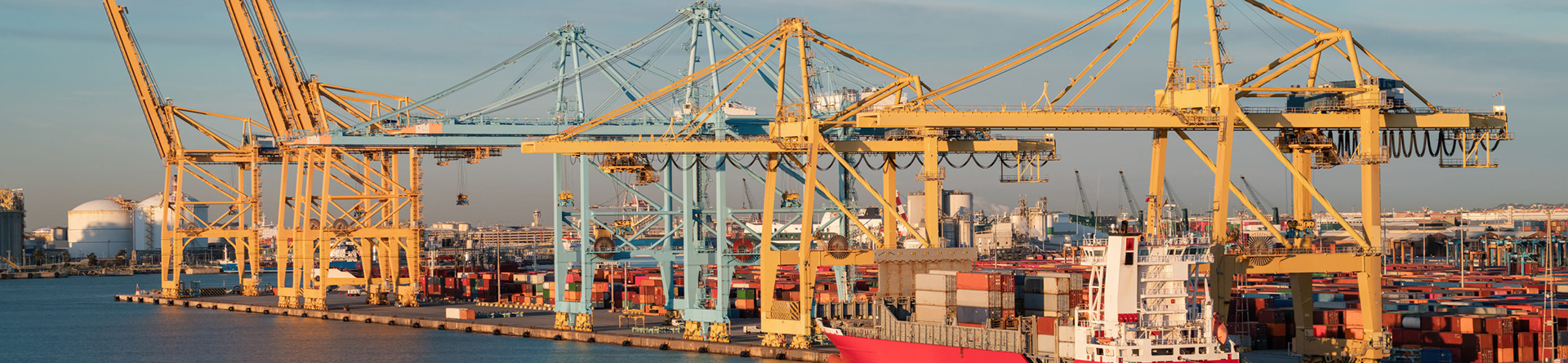
Savannah’s logistics role continues to expand. The Georgia Ports Authority’s Ocean Terminal work includes berth and container yard renovations to serve two large container ships simultaneously and support 2 million twenty-foot equivalent units of annual capacity. Phase 1 renovations to the first 1,325-foot berth have been completed, with Phase 2 scheduled for completion in June 2026.
Manufacturing has accelerated the regional pressure. Hyundai Motor Group Metaplant America represents a $7.59 billion investment in Georgia, with at least 8,500 new on-site jobs. At full production, the plant will produce 500,000 Hyundai, Kia, and Genesis electric and hybrid vehicles annually, and related suppliers have added nearly 6,900 new jobs and $2.5 billion in investment across the state.
Population growth adds to the story. The Coastal Georgia region includes nine counties, and regional projections show population rising from about 715,000 residents in 2020 to 1 million by 2060. The same regional planning framework identifies the port, industry, business, tourism, trade, government facilities, transportation, and the Brunswick and Savannah harbors as key economic drivers. Water supplies, wastewater treatment, and related infrastructure will be needed to support that growth.
The challenge is not simply more demand. It is demand arriving from several directions at once.
Industrial Growth Changes the Timing Problem
Residential growth gives utilities one kind of planning challenge, and industrial growth adds another. A manufacturing plant, supplier campus, or logistics facility might need reliable process water, potable water, fire protection, treatment capacity, or wastewater handling that fits a certain profile.
That difference matters because industrial schedules often have fixed timelines. A company might need a site served by a specific date. A supplier could follow a flagship project. Utilities may need to coordinate transmission, treatment capacity, funding, and approvals across multiple jurisdictions before service can keep pace with development schedules.
Coastal Georgia already shows how quickly water supply questions can become regional coordination issues. Bryan County officials have been preparing to change the way water will be supplied to the Hyundai Metaplant. There are plans to replace some groundwater with surface water supplied through Effingham County and to build a new connection between the Effingham and Bryan County water systems.
Industrial growth can create infrastructure needs that cross service areas, funding plans, and public expectations before the region has had time to plan for it.
Planning a project in Georgia?
As industrial growth accelerates across coastal Georgia, water and wastewater infrastructure are becoming key factors in project timing and feasibility. Evaluating your options early can help avoid delays and keep development on track.
Prefer to explore first? View Georgia water & wastewater solutions
Readiness Shapes Competitiveness
Economic development still depends on land, labor, incentives, and access to transportation. Coastal Georgia has those advantages. Infrastructure readiness determines how quickly they can be converted into operating projects.
Early utility planning can help developers decide whether a site has a practical path to service before major capital decisions are locked in. It can also help communities protect residential needs while supporting industrial expansion. A region that can show a credible path for water and wastewater gives employers, manufacturers, and developers greater confidence that growth will not overwhelm public systems.
That confidence depends on more than total capacity; timing matters just as much. A solution that arrives after a production deadline or public funding window might not solve the business problem.
Build for the Pace of Demand
Water and wastewater planning must begin early in the development process, especially in fast-growing industrial corridors. Waiting until a site, tenant, or production schedule has already been set can narrow the available options and increase cost.
Flexible, phased infrastructure approaches can help communities and developers scale capacity to actual demand rather than overbuilding early or waiting until systems become constrained. Decentralized treatment, or capacity delivered through smaller, scaled-to-fit plants closer to the point of need, can reduce costly and time-intensive planning and construction of long pipelines to distant centralized systems.
For example, a manufacturing or logistics project may require wastewater capacity long before a municipality is prepared to finance and construct a major centralized expansion. In those situations, phased decentralized infrastructure can help align utility deployment with actual project schedules rather than long-term regional buildout timelines.
Seven Seas Water Group helps communities, utilities, and developers evaluate all those options through technical, service, and financial delivery models suited to the pace and scale of regional growth. Water-as-a-Service®, timeline-based leasing, and related service approaches can help move projects forward when conventional capital planning or delivery timelines do not match development needs.
For coastal Georgia, water and wastewater readiness will increasingly shape how quickly growth can move forward. To discuss infrastructure options for a Georgia project, schedule a consultation with Seven Seas Water Group.
Image Credit: natatravel/123RF