
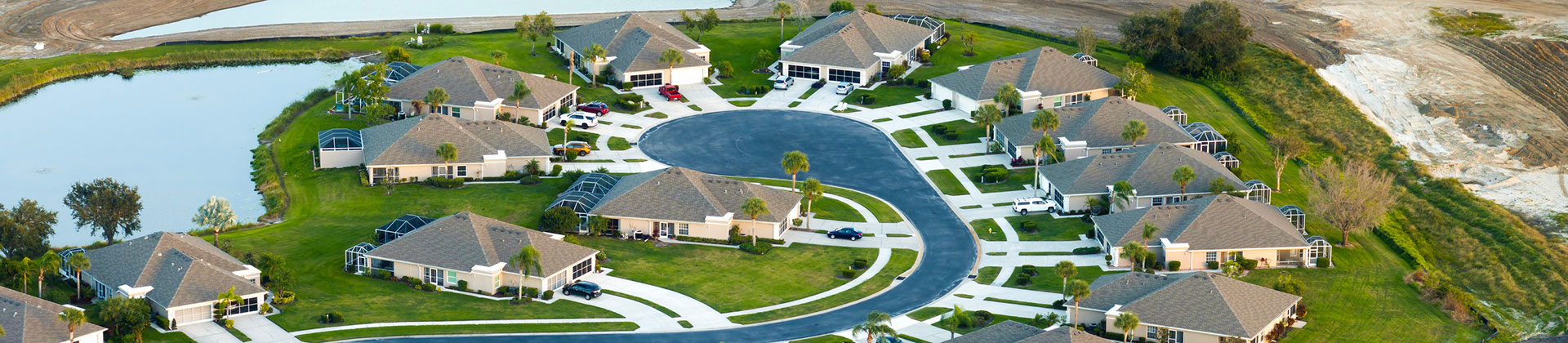
When centralized utilities can’t keep up, decentralized systems keep development moving
Florida continues to attract new residents and businesses, driven largely by internal migration and favorable tax and regulatory conditions. The state has experienced rapid growth, with U.S. Census Bureau data showing an 8% population increase since 2020- reaching more than 23 million residents by 2025. Residential and mixed-use development are growing faster than expansion of utilities.
In many high-growth regions, existing water and wastewater treatment plants have reached peak capacity, and projects can’t move ahead until infrastructure is in place. Expanding existing infrastructure can take years for design, permitting, and construction, leading to lengthy delays that are frustrating and expensive for developers.
In This Article
Why Water Infrastructure Becomes a Critical Path Risk
Unlike site work or vertical construction, water and wastewater approvals often fall outside a developer’s control. Utility expansions move through engineering, environmental review, funding, procurement, and permitting cycles that can stretch for years.
In Florida, where environmental review and discharge compliance standards are tightly regulated, those timelines can extend further. Pressure to address septic tank pollution and nutrient discharge is also accelerating the need for expanded wastewater treatment capacity. A developer may secure land, entitlements, and financing, only to discover that wastewater capacity won’t be available when needed. This can stall Certificates of Occupancy (COs), halt vertical construction, delay lot deliveries, and extend carrying costs, directly impacting projected returns.
Waiting on water or wastewater capacity?
Decentralized, Modular Systems Keep Projects on Schedule
To mitigate that risk, Florida developers are turning to decentralized, modular water and wastewater treatment systems that can be deployed much faster than centralized plant expansions. A developer can install a pre-engineered, modular plant on or near the building site, providing treatment capacity sized specifically for the project’s needs in a much shorter time frame.
Instead of building infrastructure for full build-out on Day 1, modular systems allow developers to align treatment capacity with actual absorption. As new phases come online, additional modules can be added. This phased approach reduces upfront capital exposure while ensuring treatment capacity keeps pace with demand.
Depending on the project’s needs, developers may choose either a fully managed Water-as-a-Service® (WaaS®) model or a lease structure that allows them to operate the plant themselves while preserving capital flexibility.
In many cases, installing a decentralized system early helps unlock development momentum, allowing construction to proceed while long-term regional infrastructure plans catch up. For projects located outside existing service boundaries or in areas where utilities are capacity-constrained, this flexibility can be the difference between staying on schedule and losing a season of potential sales.
Reducing Risk and Preserving Capital With Water-as-a-Service®
For developers who urgently need water and wastewater treatment but lack upfront capital or are hesitant to take on the responsibility and risk of infrastructure ownership, WaaS® presents an alternative delivery model that is rapidly gaining traction in Florida’s growth markets.
Under a WaaS® contract, Seven Seas Water Group delivers, owns, operates, and maintains the treatment system, shifting delivery, regulatory compliance, and operational risk off the developer’s balance sheet. The developer avoids upfront capital expenditures and bonding requirements, protecting cash flow and preserving capital for other core areas of the project.
Instead of funding and managing infrastructure directly, the project pays a fixed fee based on the volume of water delivered or wastewater treated. These predictable costs, backed by performance guarantees, simplify project planning. Rather than managing unpredictable operating costs and staffing needs, developers have clear, predictable expenses from the start.
Feasibility First for Faster Permitting
To ensure projects stay on schedule, developers need to consider water and wastewater treatment early on. A focused feasibility analysis can clarify available capacity, will-serve timing, permitting pathways, and the fastest route to service approval. By establishing a clear water strategy from the outset, developers can align infrastructure planning with site and entitlement work, avoiding surprises, stalled approvals, and the risk of late-stage redesigns.
Florida’s expansion shows no sign of slowing. But water and wastewater capacity constraints are reshaping how projects must be planned. Developers who treat infrastructure as a key issue from Day 1, rather than an afterthought, are likely to move faster, keeping projects on schedule, while protecting capital and long-term project performance.
Water and wastewater capacity should be evaluated alongside land acquisition and entitlements, not after horizontal construction begins.
Contact Seven Seas to schedule a feasibility call and identify your project’s fastest path to service before capacity constraints impact your timeline.
Image Credit: bilanol/123RF