
Project Details
Location: Magnolia, Texas
Customer: City of Magnolia
Solutions: Steel Concentric Activated Sludge Wastewater Treatment
Capacity: Expanded to 1.3 MGD
Challenges
#1 Maintaining operational continuity during expansion
#2 Integrating a sloped floor clarifier design with the existing plant
#3 Ensuring continued regulatory compliance
Adding a 750,000 GPD steel concentric plant allowed city to more than double treatment capacity
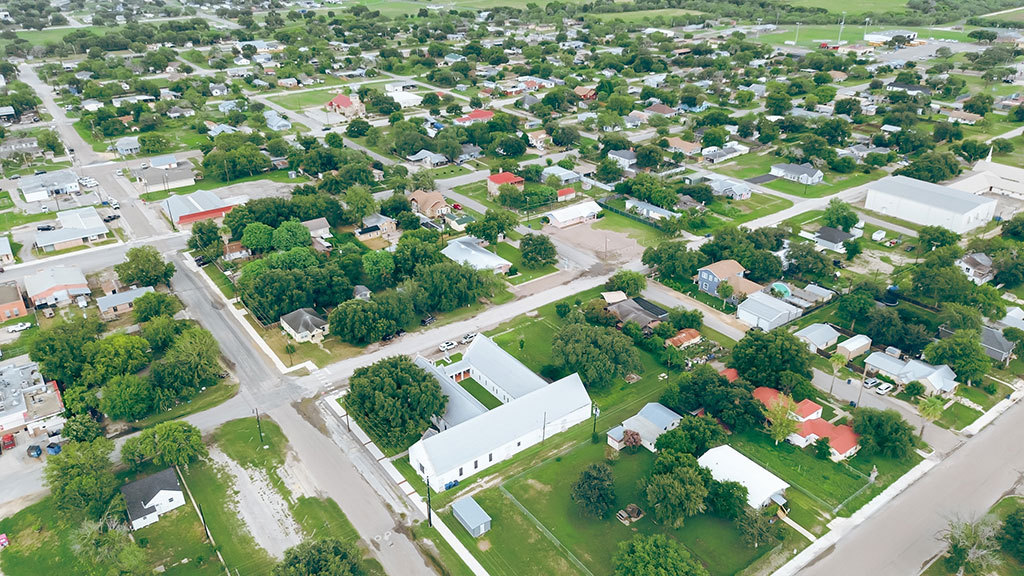
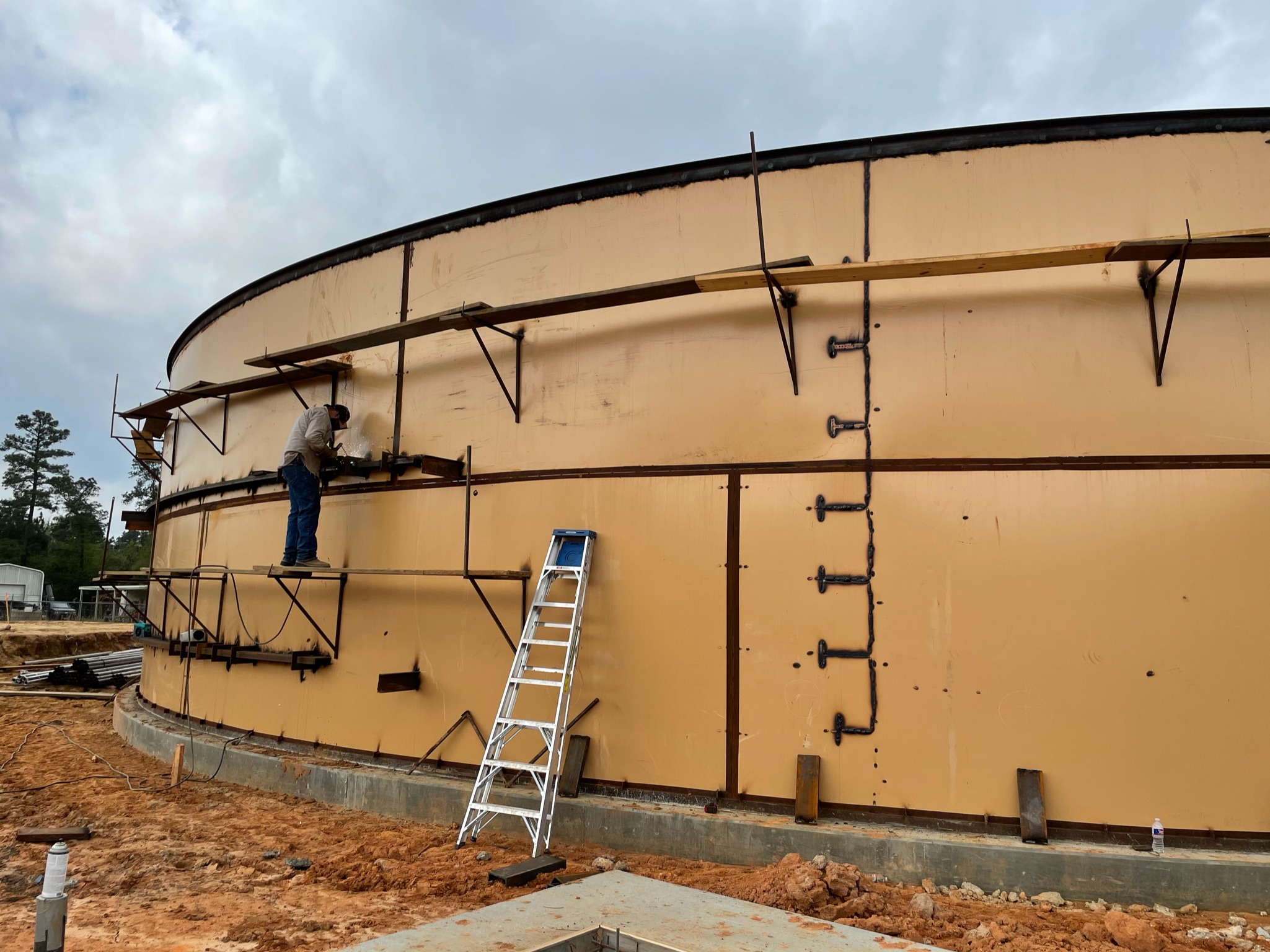

The city reached out to Seven Seas Water Group’s Houston-based subsidiary, AUC Group, to expand its existing plant using a 750,000 GPD steel concentric, package-style configuration with conventional activated sludge treatment, increasing capacity to about 1.3 million GPD.
Work included hydraulic and process integration with the existing facility, along with coordinated internal component design to support clarifier hydraulic and mechanical performance within the revised geometry.
The approach allowed efficient addition of capacity and integration with existing infrastructure, preserving a clear pathway for future phases while maintaining operational continuity and regulatory compliance.
The expansion was delivered as a municipally led, phased capital project aligned with the city’s broader wastewater planning strategy.
Design Challenge and Resolution
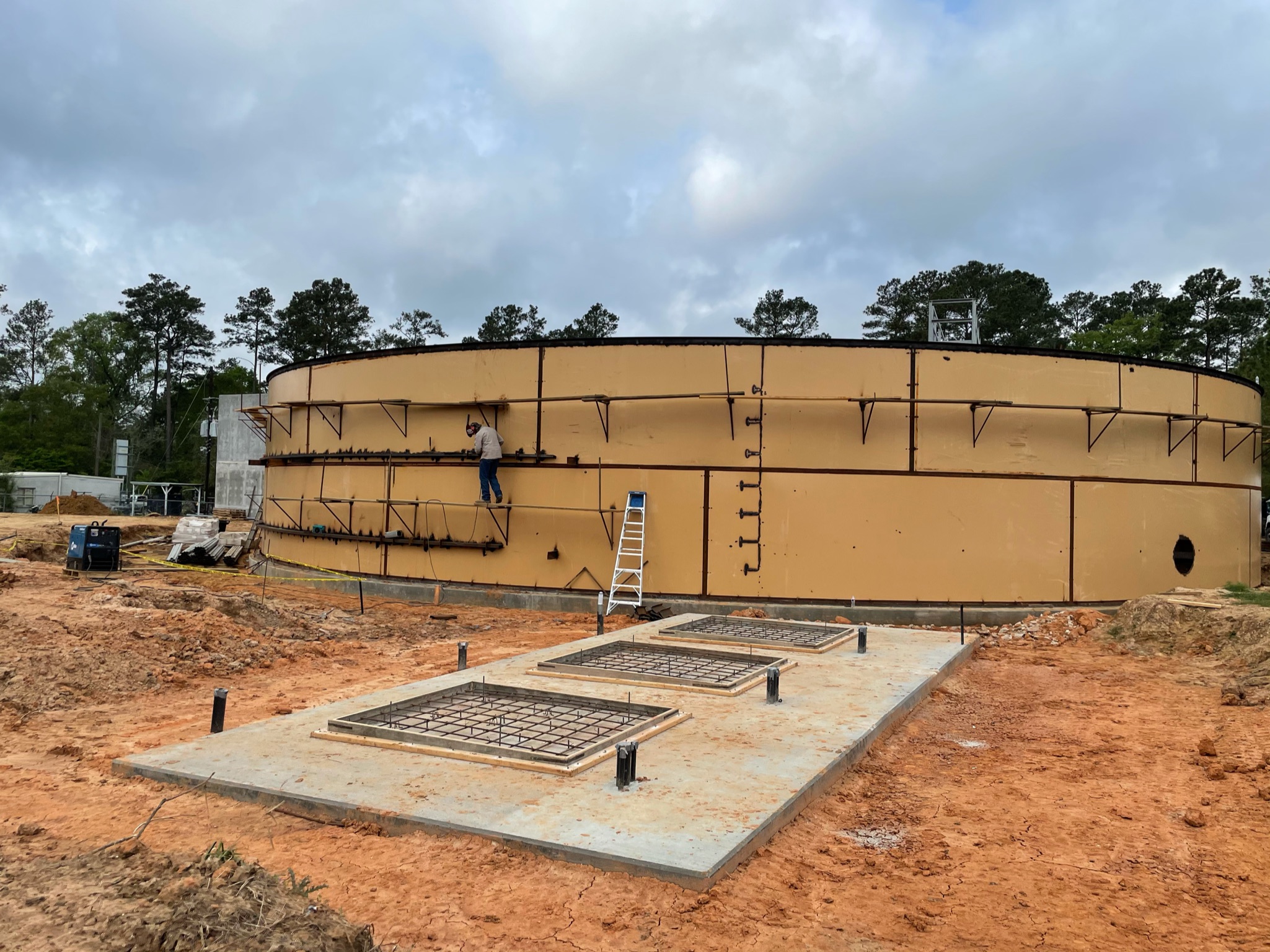
The expansion introduced a clarifier configuration not previously used by AUC in a steel concentric plant, incorporating a sloped floor rather than a traditional flat floor with sand or grout overlay.
The sloped floor reduced allowable fabrication and installation tolerances and required precise coordination to prevent misalignment, binding, or uneven loading of internal mechanisms. Because the expansion tied directly into the existing treatment train, reliable startup performance was essential.
Seven Seas and AUC redesigned the clarifier internals to align with the revised geometry while preserving intended hydraulic and mechanical performance. The resulting layout prioritized constructability, enabling efficient field installation and alignment while establishing a repeatable internal design framework for future sloped-floor concentric installations.
While the sloped floor configuration improved long-term solids management and constructability efficiency, it also demanded tighter alignment controls to preserve hydraulic performance and mechanical reliability.

Project Outcome
The expansion was installed successfully and increased treatment capacity as planned, supporting continued growth without disrupting ongoing operations. In addition to the capacity increase, the project established a proven, constructible approach for sloped floor steel concentric clarifiers that AUC can apply to future installations.
For Magnolia, the result was a phased, reliable capacity addition that integrated cleanly with existing infrastructure and preserved a clear path for future growth.
Planning for Capacity Without Overbuilding
Projects like Magnolia demonstrate how growth-driven, phased wastewater expansion can relieve capacity constraints without overextending municipal resources. Phased expansion strategies can be paired with alternative delivery models to further reduce financial strain and procurement delays.
Seven Seas Water Group supports communities facing similar pressures through modular treatment solutions, phased delivery strategies, and service models designed to match capacity investments to real demand. Options include timeline-based leasing and full-service Water-as-a-Service® contracts that allow municipalities to secure reliable infrastructure with little or no initial capital outlay and without committing to full buildout upfront.
For communities evaluating expansion pathways, Seven Seas works with public owners to assess technical requirements, delivery structures, and long-term lifecycle considerations. To explore how these models may apply to your system, schedule a consultation with Seven Seas.
Wastewater Infrastructure Handled by Water Professionals
Through flexible delivery models such as BOO and BOOT financing, Seven Seas can take on the full responsibilities of water and wastewater treatment with no upfront capital investment, charging customers under performance-based contracts. We offer variable-term arrangements and can upgrade or integrate with existing infrastructure. Our modular equipment can be efficiently scaled up or down to meet changing demand.
Contact Seven Seas. Our water professionals are ready to share practical options for phased expansion, operational continuity, and long-term compliance.
Connect With Seven Seas Water Group
Sign up for the latest news and trends in water production and wastewater treatment.