

With recent advances in desalination technology, this lightly salty water could hold the key to solving drinking water scarcity
Brackish water is coming up in the news more and more lately. What is it? Simply put, it’s water that is saltier than freshwater but less salty than seawater.
You may have heard about its use as source water for desalinated drinking water, which is newsworthy because desalinating brackish water requires less energy — and therefore less money — than desalinating seawater.
Availability is another reason for the interest. While brackish water can be found in surface bodies of water like estuaries, it’s also found in aquifers in areas that may be far from a coastline, which makes it a potential source of water in areas where freshwater aquifers have been depleted.
Why Brackish Water Matters More Than Ever
Global supplies of fresh water are being stressed by increasing demand, climate change, and economic development. The United Nations and other organizations have warned that billions of people live in water-scarce regions and that by 2030, water scarcity could displace as many as 700 million people.
The lion’s share of water withdrawals in the U.S. come from freshwater sources, and almost all saline water withdrawals are used in thermoelectric power generation. In general, people cannot drink it safely, irrigate crops with it, water livestock with it, or use it in industry without risk of damaging equipment.

Slightly saline water can sometimes be used for irrigation, but moderate to highly saline water requires treatment before agricultural or human use.
Still, not all saline water is unusable. In some regions, untreated, slightly saline water may fill in for fresh water, such as in Colorado, where saline water with up to 2,500 ppm is used for crop irrigation. But water with moderate to high salinity has few applications.
As demand rises and droughts intensify, alternative sources of potable water have become critical, among them, desalination, which can transform abundant but all-but-unusable brackish water into valuable freshwater fit for drinking, irrigation, industry, and more.
What Exactly Is Brackish Water?
According to the U.S. Geological Survey (USGS), brackish water usually refers to water with a concentration of total dissolved solids (TDS) of roughly 1,000–10,000 mg/L. A more precise scale from the USGS establishes five gradations of water salinity:
- Fresh water: Lower than 1,000 ppm
- Slightly saline water: Between 1,000 ppm and 3,000 ppm
- Moderately saline water: Between 3,000 ppm and 10,000 ppm
- Highly saline water: Between 10,000 ppm and 35,000 ppm
Other salinity scales have, however, been proposed. One example is found in the book, Salinity Management for Sustainable Irrigation: Integrating Science, Environment, and Economics, by Daniel Hillel:
- Fresh water: <500 ppm
- Slightly brackish: 500-1,000 ppm
- Brackish: 1,000-2,000 ppm
- Moderately saline: 2,000-5,000 ppm
- Saline: 5,000-10,000 ppm
- Highly saline: 10,000-35,000 ppm
- Brine: >35,000 ppm
No matter the scale used to describe it, brackish water’s intermediate salinity range makes it unsuitable as-is for drinking and other uses. But, the increasing availability of desalination technology makes it an important resource.
Understanding what makes water brackish is just one piece of the puzzle. Equally important is where the salinity comes from — and why it varies so widely across regions. The U.S. Geological Survey explains how brackish groundwater is produced:
- Seawater and marine sediments: Ancient seawater trapped in geological formations releases salts over time.
- Mixing between aquifers: Brackish water can form where saline and fresh groundwater layers intermix, sometimes aided by wells or pumping.
- Leaching from soils and surface salts: Salty soils or road salt runoff in winter can seep into shallower aquifers.
- Seawater intrusion: In coastal areas, overpumping of fresh water can pull seawater into aquifers.
- Oil and gas brine: Waste brine produced during extraction can migrate into freshwater aquifers if not managed properly.
- Dissolution of minerals: As water infiltrates sediments and rocks, it dissolves salts like halite and gypsum.
Where Is Brackish Water Found?
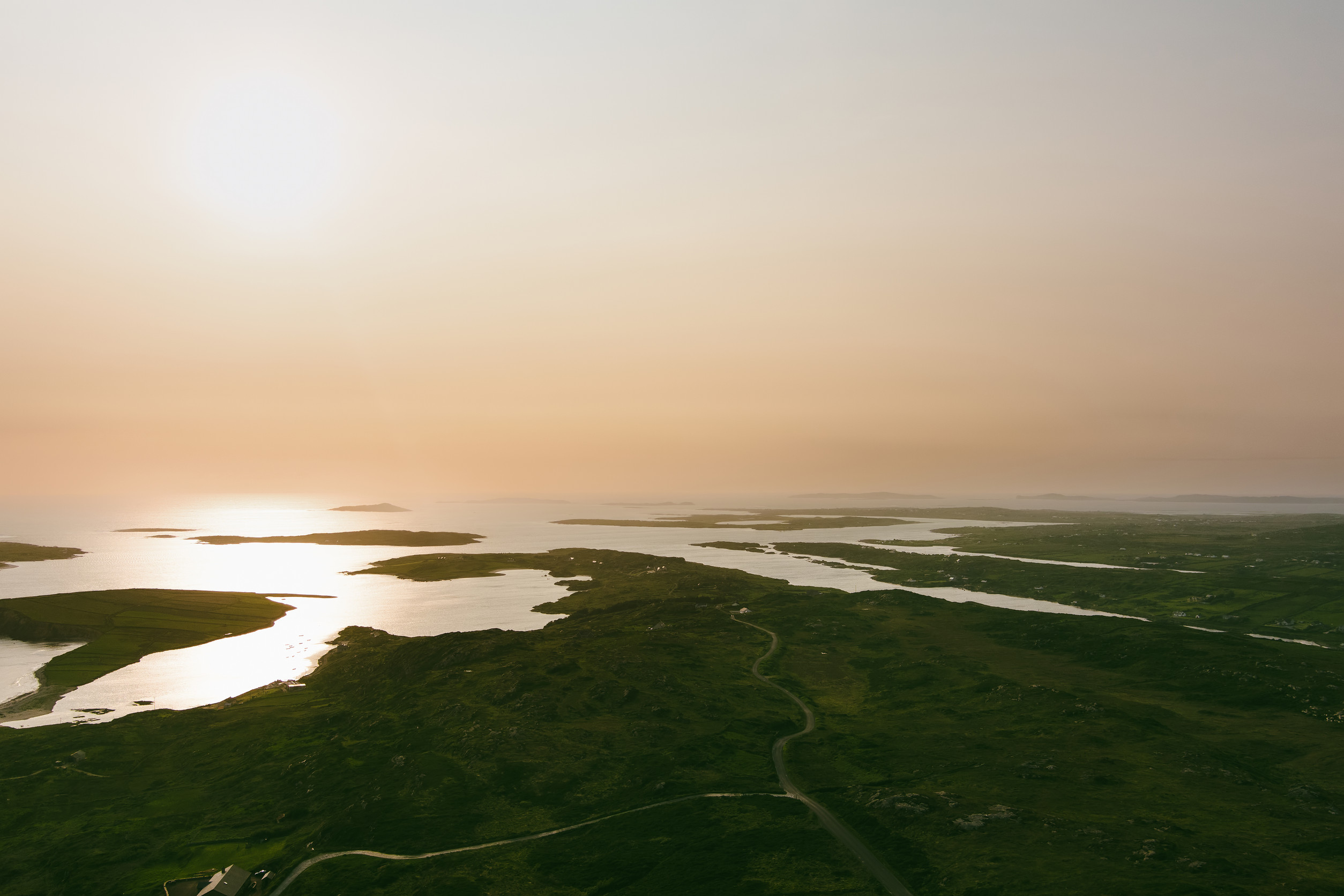
Coastal regions and estuaries are key zones where brackish water naturally occurs due to the mixing of fresh and salt water.
As mentioned, brackish water can be found where fresh water and salt water mix, typically in estuaries, coastal aquifers, and tidal rivers.
It can be found in depleted freshwater aquifers that have been infiltrated by seawater near coastlines. Farther inland, minerals dissolved during slow groundwater movement can accumulate in deep, isolated reservoirs, especially across the U.S. Southwest. Some groundwater deposits, like Texas’s Gulf Coast, Wilcox, Queen City, and Sparta aquifers, contain massive reserves of brackish water. Nationwide, USGS analyses estimate brackish groundwater volumes at more than 35 times the volume of fresh groundwater used each year in the U.S.
Brackish water also can be found in so-called lenses, which occur when fresh water from precipitation infiltrates through the ground on islands and other coastal areas, and floats atop the denser saline groundwater.
Often overlooked are extensive undersea brackish aquifers, such as those off the Eastern Seaboard and the coast of Hawaii. Once identified, brackish water sources offer enormous potential — but unlocking that potential depends on how we treat them.
How Is Brackish Water Treated?
Desalination can transform abundant brackish water into valuable fresh water. Legacy desalination methods include thermal distillation processes such as multistage flash (MSF) and multieffect distillation (MED), which come with high energy costs, rendering large-scale projects economically prohibitive except in energy-rich regions.
In contrast, modern reverse osmosis (RO) has reduced the cost of desalination thanks to its high-performance membranes and energy recovery devices. Brackish water reverse osmosis (BWRO) takes energy efficiency even further than seawater (SWRO). Because of lower salt levels, less energy is required to force water through the membranes. BWRO can require less than 10% of the energy used by legacy thermal approaches, making it a valuable solution for future-proofing water supplies.

Reverse osmosis systems efficiently remove salt and impurities from brackish water, making it suitable for municipal and industrial use.
The desalination process for brackish water has a number of similarities and a few differences when it comes to concentrate stream management. Steps include:
- Source identification: Hydrogeological studies take place, using methods such as the Texas Water Development Board’s Brackish Resources Aquifer Characterization System (BRACS) mapping process, and test wells are drilled to pinpoint brackish zones.
- Pretreatment: Water undergoes sediment removal and chemical conditioning to protect RO membranes.
- Membrane treatment: Pressurizing water across BWRO modules separates low-salinity permeate from a high-salinity concentrate.
- Post-treatment: Permeate is remineralized and disinfected to meet drinking-water standards.
- Delivery and concentrate stream management: Treated water enters distribution systems. Concentrate stream disposal is handled responsibly to meet environmental standards with evaporation ponds, deep-well injection, or compliant discharge into saltwater bodies.
Visualizing the Value of Brackish Water
Brackish water desalination delivers sustainable benefits that are often misunderstood or overlooked. The graphic below illustrates how BWRO technology integrates with existing infrastructure to supply multiple user groups — while protecting freshwater reserves, lowering energy use, and building drought resilience.

Brackish groundwater can be sustainably sourced, treated, and delivered to provide drought-resilient, cost-effective water for communities facing supply challenges.
Of course, like any treatment process, desalination comes with environmental considerations, particularly around how we manage its byproducts.
Environmental Considerations and Misconceptions
Brackish aquifers are frequently isolated beneath confining layers and are hydraulically separate from potable resources, so pumping from them does not necessarily negatively affect other groundwater resources. Well-permitted projects incorporate monitoring networks to ensure extraction remains sustainable.
Concentrate management poses environmental risks but it can be responsibly managed even far inland in various ways, including:
Evaporation ponds: Inland plants commonly direct concentrate into lined or unlined evaporation ponds. Under arid climate conditions, solar evaporation concentrates salts until solids precipitate, reducing concentrate stream volume and enabling safe disposal.
Deep-well injection: When geology allows, concentrate is injected into deep, confined aquifers or depleted oil/gas reservoirs. The Texas Water Resources Institute supports this method, complemented by state permits. Injection can also assist with enhanced oil recovery.
Zero-liquid discharge systems: Advanced zero-liquid discharge (ZLD) facilities use multistage RO, thermal evaporation, crystallizers, or spray dryers to eliminate liquid discharge. These systems recover almost all water.
Evaporation ponds and ZLD systems also permit the recovery of valuable substances such as sodium chloride, sulfate salts, gypsum, and various metal precipitates. Concentrate streams can also be mined for magnesium and potassium, and other minerals can be used as injection fluid in oil and gas extraction.
In coastal areas, concentrate discharge into saltwater bodies can be done responsibly to ensure minimal ecological impact. Key factors in sustainable concentrate discharge include siting outfalls in areas with less productive ecosystems, thoughtful design and siting of diffusers, and effluent monitoring programs operated by third parties that can slow discharges when saline levels rise too high in benthic ecosystems.
In the case of one Seven Seas plant in Texas, the concentrate stream salinity is lower than the salinity of Baffin Bay, the receiving body, so the stream can be discharged with little to no impact.
Why Communities Are Turning to Brackish Groundwater
Despite these considerations, growing drought frequency, population pressure, and aging surface water infrastructure are pushing communities to diversify their water supplies. Many are turning to BWRO desalination as part of their planning.
- Bethanie Village, Kharas, Namibia, has opened a BWRO desalination plant that runs on renewables.
- In Central Texas, utilities like the San Antonio Water System have embedded brackish RO in drought-resilience frameworks. SAWS’s 2012 brackish desalination program was launched to reduce dependence on the Edwards Aquifer.
- The I-35 Corridor from Buda to San Marcos, Texas, relies on the Alliance Regional Water Authority (ARWA), which has actively designated brackish production zones through 2032 to satisfy future demand.
- The Southmost Regional Water Authority in Brownsville, Texas, now operates a BWRO plant producing potable water from local brackish aquifers.
Seven Seas has pioneered Texas’ first public-private partnership BWRO arrangement in Alice, Texas. Through its Water-as-a-Service® model, Seven Seas financed, built, and will operate a 2.7 MGD BWRO plant. The City of Alice faced no upfront cost for the plant, while the project lowered long-term water prices.
The plant ensures reliable, cost-effective, and drought-proof water for residents from its own brackish water aquifer. Local officials highlight the project’s success, noting lower costs, risk mitigation, and water independence — showing how public-private collaboration can unlock essential BWRO desalination infrastructure rapidly even for landlocked municipalities.
An Underused Resource With Strategic Value
As the cost of pumping freshwater rises and RO technology advances, communities can benefit by revisiting their brackish groundwater resources in light of new efficiencies in BWRO desalination. Brackish groundwater isn’t just a backup — it’s a strategic asset. If your community is exploring water independence, resilience, or cost-effective infrastructure, contact Seven Seas about how BWRO and Water-as-a-Service® can support your goals.
Image Credit: oykuozgu/123RF
Erik Arfalk is the Senior Vice President of Business Development at Seven Seas, specializing in innovative and sustainable water and wastewater solutions in the US and the Caribbean. Previously, he was the Chief Commercial Officer at Fluence Corporation, where he launched MABR. Erik has held leadership roles at Atlas Copco and GE in Europe and the US, starting his career in strategy consulting. He holds a Master's in Business Administration and Economics from Lund University, Sweden. Erik's passion for water solutions and his talent for building strategic partnerships have established him as a respected industry leader.