
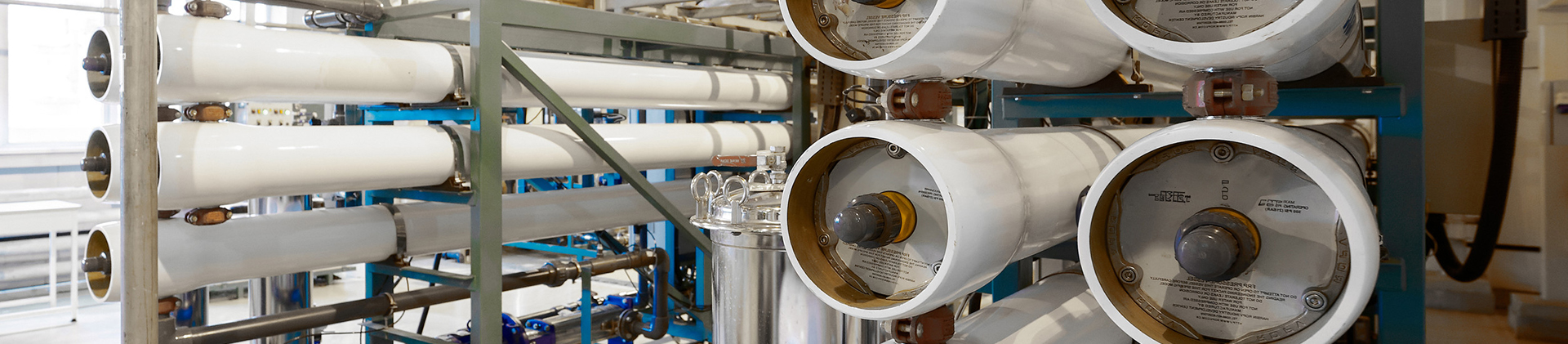
Efficiency improvements are changing the water-energy balance and driving down costs
For years, desalination carried a reputation for being expensive and energy intensive, and many communities thought of it as a last resort. That picture is changing. Modern reverse osmosis systems use far less energy than earlier generations, and recent analysis from the International Energy Agency shows how these gains are reshaping the water-energy balance in many regions. At the same time, pressure on traditional water supplies is intensifying, shifting the economics.
Desalination already plays an increasing role globally, particularly in regions facing water scarcity. As these trends strengthen, more communities are finding that desalination passes a cost-benefit analysis. Amid unpredictable imported water rates, climate-driven surcharges, and uncertainty in snowpack and river flows, local water agencies see year-round reliability with desalination.
Industry Consensus: Desalination Becomes a Core Water Strategy
Recent reporting in Smart Water Magazine highlights a broader industry consensus: desalination has shifted from a last-resort option to a fundamental pillar of water security. With hundreds of millions of people lacking access to safe drinking water and billions facing unreliable supplies, the publication notes that desalination is increasingly viewed as both viable and necessary. Rapid advances in energy efficiency, system design, and renewable integration are dispelling outdated assumptions about cost, environmental impact, and energy demand. Together, these improvements are accelerating global adoption.
As imported water grows more vulnerable to climate cycles, and desalination grows more efficient through continued improvements in membranes and energy recovery, 2026 may become a watershed year for desalination. Many communities could embrace a new level of predictability that importing water cannot match.
Imported Water Less Reliable and More Expensive
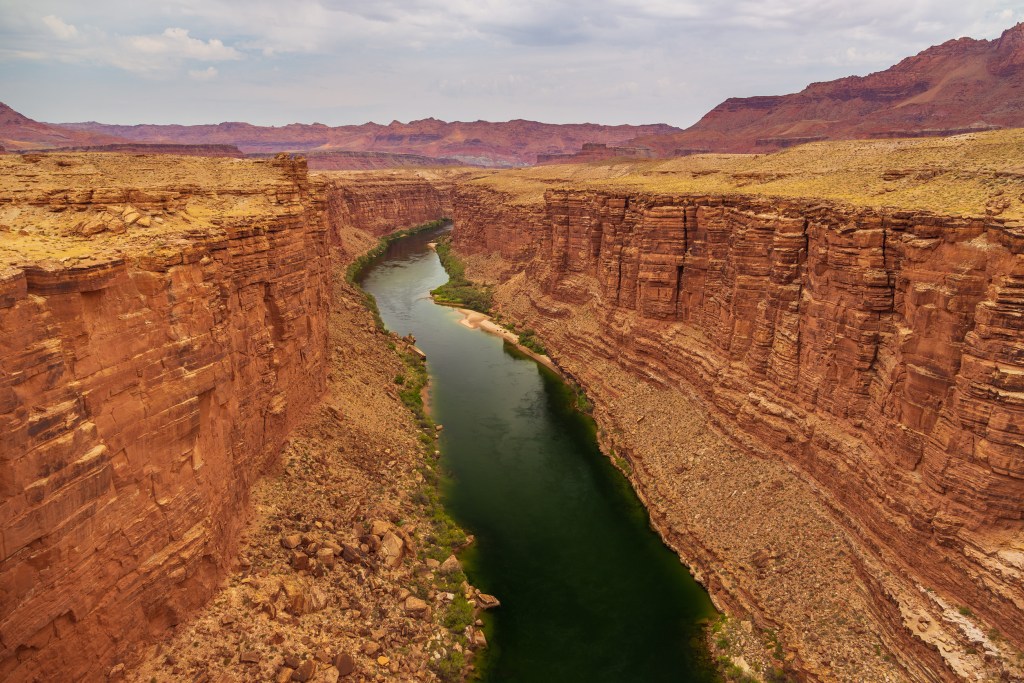
Declining Colorado River supplies highlight why imported water has become more vulnerable to climate cycles, driving more communities to evaluate local desalination.
Across the country, communities that depend on imported water are facing financial and operational pressures. Wholesale rates continue to climb, and agencies must factor into their planning climate variability, long-distance conveyance, and seasonal shortages. In the Southwest, the Colorado River illustrates the challenge. The region will see supply reductions again in 2026, reinforcing that imported water alone cannot offer long-term predictability for the Southwest.
Rising transport costs add to this uncertainty. Policy discussions in California acknowledge that pumping and moving water across mountain ranges and hundreds of miles of aqueduct is becoming more expensive, even before climate-driven surcharges are applied. Desalinated brackish water from Carlsbad, Calif., however, is already cost-competitive with other resources. This shift brings communities closer to the point where costs for imported supply and local desalination intersect.
Climate exposure further complicates planning for fast-growing regions. Snowpack variability, saltwater intrusion, and prolonged droughts can disrupt the supply assumptions that cities and counties once considered stable. Many coastal and arid communities now view long-range imports as increasingly vulnerable to hydrologic cycles, and they are reexamining the role that local production can play in achieving year-round reliability.
The World Bank documents how desalination costs have declined significantly over the past several decades due to better membranes, improved energy recovery, and more efficient system design. When rising import costs are included in long-term projections, local production can become more attractive than transporting water from distant reservoirs or rivers.
Desalination presents a transformative opportunity, but scale and delivery models determine whether a project succeeds. Large, capital-intensive supply projects can carry long lead times and high financial risk. In Senegal, for instance, officials canceled a large-scale desalination contract after an unfavorable cost-benefit analysis.
Large desalination projects sometimes earn a reputation as white elephants, but modular, decentralized plants avoid those pitfalls and can be delivered far faster. Paired with new delivery options, decentralized projects can be commissioned in months, with the risk offloaded to the provider.
Service-Based Desalination
New service-based delivery models are redefining the economics of desalination, removing the large upfront investment requirement. Water-as-a-Service® (WaaS®) agreements can provide capacity without capital expenditure, and the customer pays only for the water delivered under a long-term, performance-based contract. In Alice, Texas, WaaS® provided a water supply at lower initial and long-term cost, with no upfront CAPEX, turning the brackish groundwater underfoot into the water resilience the city needed.
2026 May Be a Tipping Point for Desalination
2026 is shaping up to be a decisive year for local water production. More communities could recognize that desalination provides a stable option for meeting long-term demand, and that reliability can have an outsized impact on cost. Seven Seas Water Group’s industry-topping 98.7% plant availability brings reliability to a new level. Modular options, decentralized strategies, phased development, and flexible WaaS® and leasing options can make desalination an economically viable solution. Schedule a consultation with Seven Seas to explore whether the desalination inflection point has arrived for your community.
Image Credit: nordroden/123RF.