

As growth outpaces traditional infrastructure, modular systems offer a smarter, faster path
Key takeaway:
Phased, decentralized utilities keep Georgia housing on schedule without new debt or years-long pipeline extensions.
Georgia’s population has surged—outpacing utility build-outs in fast-growing counties like Forsyth, Cherokee, and Long. The result: permitted housing is ready, but wastewater capacity is still years away.
This exposes a growing challenge: Traditional utility infrastructure can’t keep up.
Centralized water and wastewater infrastructure can take years or even decades to plan, permit, and construct. For local governments and developers trying to meet immediate housing and commercial demand, these delays can bring projects to a standstill. So, developers and municipalities are turning to modular, decentralized utilities that provide the flexibility of phased installation, allowing systems to expand with growth rather than building for projected demand.
Similar pressures affect drinking water supply. In fast-growing areas, well fields and centralized treatment plants may not keep pace with housing expansion. Water treatment units can be deployed alongside wastewater systems, ensuring both sides of the utility equation are readily available.
Growth Pressures in Key Counties
Suburban expansion continues to push northward from Atlanta, with new master-planned communities and commercial centers rising at record speed. Forsyth is one of the fastest-growing counties with an estimated population of 284,037 in 2025 — a more than 60% increase since 2010.
To the west, Cherokee County is surging along the Interstate 575 corridor. Once a rural area, it’s now a magnet for families seeking a balance between affordability, access to Atlanta’s job market, and quality of life.
Further south, Long County is booming thanks to its proximity to the coast and the presence of Fort Stewart, one of the largest military installations in the Southeast. As more families are drawn to the area, there has been a sharp rise in residential demand and the need for reliable utility services.
These rapidly growing counties share a common challenge: Population growth is outpacing infrastructure investment. While developers are ready to meet the housing demand, centralized wastewater systems are stretched thin, and extending service to new developments can be costly and time-consuming. Without scalable utility solutions, urban areas cannot expand, and economic momentum slows.
Why Centralized Systems Fall Short
Georgia’s traditional centralized treatment systems were not designed to handle the rapid growth suburban counties are experiencing. Building a large, centralized plant, or expanding an existing one, requires massive upfront capital investment, years of planning and permitting, and construction of sewer pipeline extensions to reach distant developments.
Centralized plants are sized for tomorrow’s demand – leaving communities paying today for capacity they may not need for years. This mismatch puts financial strain on municipalities, which must service debt on that infrastructure whether it’s used or not.
For developers and homebuilders, the time spent waiting for utilities results in stalled approvals and increased costs. When wastewater capacity lags housing demand, the entire development pipeline slows in communities that urgently need housing.
The Decentralized Utility Solution
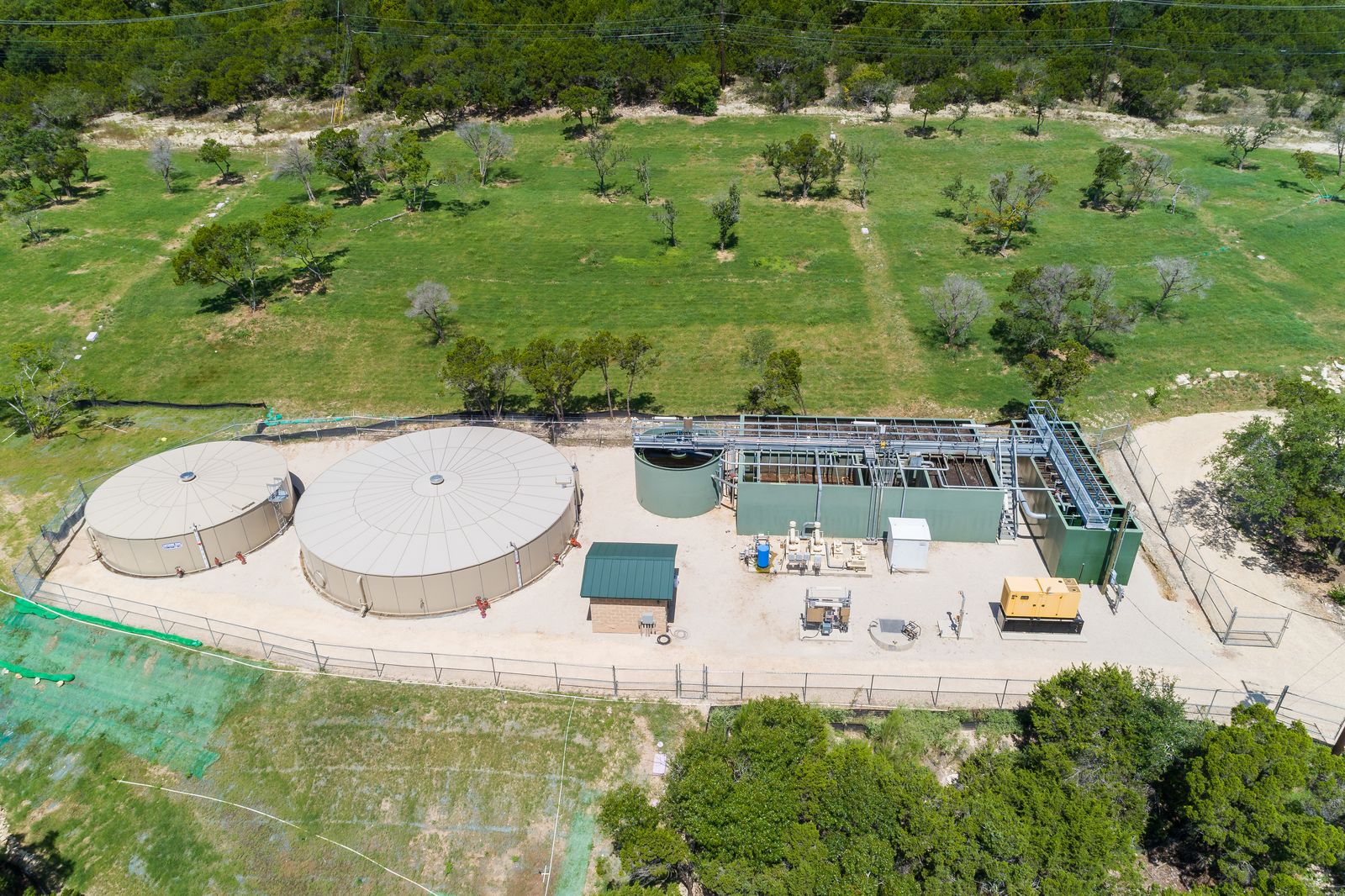
Modular, prefabricated plants can be phased in as neighborhoods grow, adding capacity in months instead of years.
Decentralized water and wastewater treatment systems offer a practical alternative. These modular, prefabricated plants can be deployed in phases, adding capacity as neighborhoods grow. Instead of taking years for a single large facility, decentralized systems can be installed in months, keeping pace with development schedules.
Because they can be located closer to new subdivisions or commercial hubs, decentralized utilities eliminate the need for long water pipelines and sewer extensions, resulting in significant cost and time savings for both developers and municipalities.
Seven Seas Water Group’s decentralized systems are designed to meet or exceed the standards of the Georgia Environmental Protection Division and U.S. Environmental Protection Agency, so projects move forward quickly, while meeting regulatory requirements and protecting local waterways and ecosystems.
- Phased capacity: Start as small as 50,000 gallons per day (GPD) and scale to 1.0–1.5 million GPD (1.0–1.5 MGD) as development expands.
- Speed: Typical modular lead times measured in months, not years.
- Compliance: Designed to meet GA EPD and EPA standards, with performance-based O&M under WaaS®.
Financing Options: Lease and WaaS®
For local governments and developers, financing can be one of the biggest hurdles in getting new utility infrastructure. Seven Seas offers flexible financing models designed to meet different project needs:
- Lease Plant Program. Seven Seas allows municipalities or developers to lease modular treatment plants with zero upfront capital investment. Plants can be installed in phases, expanding alongside real development demand without burdening local budgets. With a lease contract, municipalities and developers are responsible for operating the plant they lease.
- Water-as-a-Service® (WaaS®). Going a step further with our WaaS® option, Seven Seas builds, owns, operates, and maintains the plant for a fixed monthly fee, delivering compliance, reliability, and uptime with performance accountability, while you pay only for the capacity you use.
Both models allow counties and developers to align infrastructure expansion directly with growth, avoiding the pitfalls of overbuilding and the tax burdens of traditional financing.
Benefits for Rapid-Growth Counties
Decentralized utilities offer clear benefits to all stakeholders.
- Developers gain speed to market. Wastewater capacity can be delivered on time, keeping housing projects on schedule and preventing delays in fast-moving markets.
- Municipalities avoid overbuilding and debt-heavy infrastructure, while still having the flexibility to expand as demand increases. This allows them to manage growth responsibly.
- Residents enjoy reliable, compliant, and environmentally responsible infrastructure that grows with their communities, rather than being constrained by it.
Georgia’s rapid-growth counties can’t afford to wait on the slow, capital-heavy model of traditional utilities. The state’s booming suburbs need flexible, scalable, and cost-effective solutions that keep pace with housing and economic development.
Decentralized utilities, paired with innovative financing options like our Lease Plant Program and Water-as-a-Service®, give municipalities and developers the tools to build responsibly, manage budgets wisely, and deliver the infrastructure needed to support Georgia’s future. Schedule a consultation today to learn more about our scalable, modular decentralized systems and flexible financing solutions.
Image Credit: f11photo/123RF.