
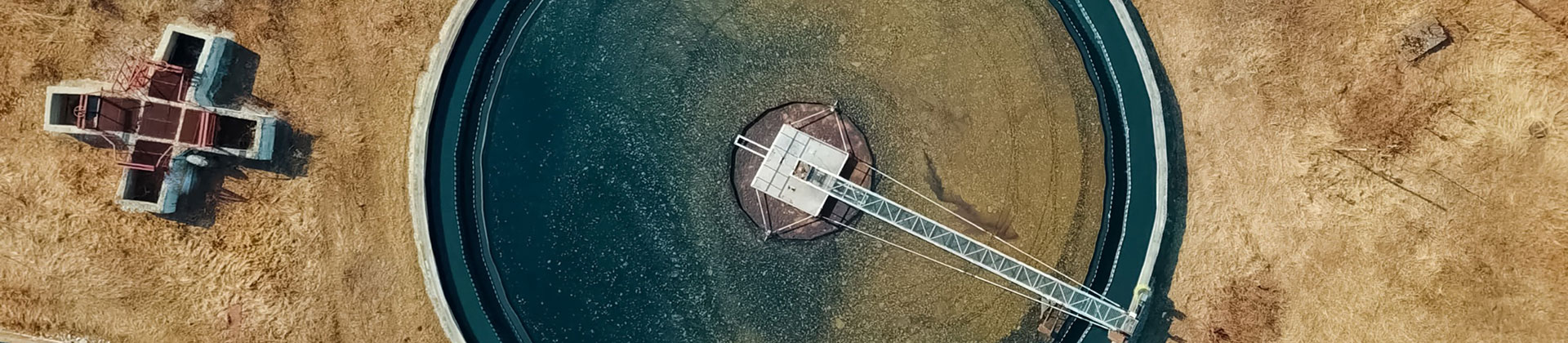
Exploring the depths of these water and wastewater treatment processes
Dispersed air flotation and dissolved air flotation (DAF) are both processes used in water and wastewater treatment to aid in the removal of suspended solids, oils, and other contaminants. While they both use air to effectively separate contaminants from liquids, they vary in their performance and suitability for certain applications. What are the key differences between the two processes and their advantages and disadvantages?
Dispersed Air Flotation
In dispersed air flotation, air is introduced into wastewater in the form of air bubbles about 1mm in diameter using mechanical devices, such as pumps or mechanical aerators. The bubbles are dispersed throughout the wastewater, where they attach to particles or contaminants, forming a layer of froth or foam that floats to the surface and forms flocs, which can be easily skimmed off. Dispersed air flotation is effective at removing larger particles and contaminants, but tends to be less efficient at removing smaller particles and less buoyant substances.
Advantages of dispersed air flotation include:
- Efficient removal: Dispersed air flotation systems can efficiently remove larger particles and contaminants from wastewater streams.
- Simple operation: The process is relatively straightforward, making it suitable for various industrial and municipal applications.
- Cost-effectiveness: Dispersed air flotation systems may have lower initial capital costs than other treatment methods, making them cost-effective for certain applications.
- Flexibility: Dispersed air flotation systems can be adapted or customized to suit specific treatment requirements and space constraints. They can also handle fluctuations in wastewater composition and flow rates, performing reliably in diverse conditions.
- Minimal use of chemicals: In some cases, dispersed air flotation may require fewer or no chemicals for coagulation or flocculation, reducing chemical costs and environmental impact.
- Low footprint: Dispersed air flotation systems can be designed to occupy less space than alternative technologies, making them suitable for compact installations or retrofitting into existing facilities.
Because dispersed air flotation is well-suited for the removal of large particles, it can be used for the selective removal of specific particles or contaminants based on size, density, or surface properties, allowing for tailored treatment solutions in various industrial processes.
Some optimal uses include the removal of suspended solids, oils, and other contaminants found in industrial wastewater in the food processing, pulp and paper, mining, and metal-finishing industries. Dispersed air flotation’s efficiency in removing oils, greases, and other hydrophobic substances from water makes it useful in treating wastewater from oil and gas industry facilities and carwashes.
Dispersed air flotation has been widely used for the removal of heavy metals through the flotation of metal hydroxide precipitates or metal ion complexes formed during coagulation and precipitation processes. It can also be used for clarifying high-turbidity surface water, as a pretreatment for membrane filtration to reduce membrane fouling, and for treating municipal wastewater and leachate generated from landfill sites.
Dissolved Air Flotation (DAF)
In the process of dissolved air flotation (DAF), air bubbles are generated without the need for intense mechanical agitation. Instead, air is dissolved into the water under pressure within a saturation tank before being introduced into wastewater in a flotation tank. Upon release of pressure, the dissolved air forms tiny bubbles, typically ranging from 0.01 to 0.1 mm in diameter, significantly much smaller than those generated in dispersed air flotation. These bubbles adhere to suspended particles or impurities, decreasing their density, and causing them to rise to the surface, forming a layer of sludge or froth that can be removed by skimmers. DAF is particularly effective in removing finer particles, oils, and substances with lower buoyancy.
Advantages of DAF include:
- Efficient removal: DAF is highly effective in removing a wide range of contaminants from water, including suspended solids, oils, grease, algae, and dissolved organic matter, with high removal efficiencies of both large and small particles, including those with low buoyancy.
- Rapid process: DAF processes often operate at higher hydraulic loading rates and can achieve shorter retention times than traditional sedimentation processes, leading to higher capacities and faster processing.
- Flexibility: DAF systems can be easily adjusted to accommodate changes in influent water quality, flow rates, and treatment objectives, for greater operational flexibility and optimization. They also tend to be robust and less sensitive to variations in influent water.
- Reduced chemical use: In many cases, DAF requires fewer chemicals for coagulation and flocculation than other treatment methods, leading to cost savings.
- Enhanced water clarification: DAF produces clarified water with low turbidity levels, making it suitable for applications where high-quality effluent is required, such as drinking water treatment or discharge into sensitive aquatic environments.
- Separation of oil and grease: DAF is particularly effective in removing oils, grease, and other hydrophobic substances from water, making it suitable for industries where oily wastewater is generated.
- Environmental benefits: DAF systems can contribute to sustainability by reducing the environmental impact of wastewater discharges through the efficient removal of pollutants.
- Compact design: DAF systems typically have a smaller footprint than conventional sedimentation tanks, making them ideal for limited spaces or for retrofitting into existing facilities.
DAF is commonly used in municipal wastewater treatment plants during the primary treatment stage to remove suspended solids, organic matter, and other contaminants, and it plays a crucial role in wastewater reuse and recycling applications.
DAF is widely employed in various industries, including the food and beverage, pulp and paper, chemical manufacturing, and textile industries, for the treatment of industrial wastewater containing pollutants such as oils, grease, suspended solids, and heavy metals. It is particularly effective in treating oily wastewater streams generated from industries such as oil refineries, and the petrochemical, machining, and automotive industries. DAF is also used to treat leachate generated from landfill sites.
DAF is often used in drinking water treatment plants for the clarification of raw water from surface water sources, removing turbidity, algae, suspended solids, and other impurities. DAF serves as an effective pretreatment step for membrane filtration processes, removing suspended solids, oils, and other foulants to prevent membrane fouling and enhance filtration efficiency.
DAF is also employed in various industrial processes requiring high-quality water, such as cooling water systems, boiler feed water treatment, and process water recycling.
Process Comparison: Unveiling the Distinctions
While dispersed air flotation and DAF have many similarities, some factors set them apart:
- Air-distribution mechanisms: Dispersed air flotation uses mechanical devices to agitate and aerate water, whereas DAF systems use high pressure to saturate water with air.
- Bubble size: Dispersed air flotation typically produces larger bubbles of about 1 mm in diameter, while DAF generates much smaller bubbles of 0.1 mm or less.
- Efficiency: DAF is generally more efficient for the removal of smaller particles and contaminants due to the increased surface area provided by the smaller bubbles.
- Applicability: Dispersed air flotation may be more suitable for applications where larger particles are present.
- Operating costs: DAF systems may have higher initial capital costs due to the need for a saturation tank and compressor equipment, but they can be more cost-effective in the long run due to their higher efficiency.
Both dispersed and dissolved air flotation are widely used for wastewater treatment and purification. Choosing between them depends on factors such as the particle size and nature of the contaminants, required treatment efficiency, and operational considerations.
Contact Seven Seas Water Group to learn more about these and other innovative water and wastewater treatment solutions available.
Image Credit: lumays/123RF